
ThaiThuk topic hub
Pattaya
Reporting and practical guides from the city we are based closest to — what happened this week, and how the place actually works day to day.
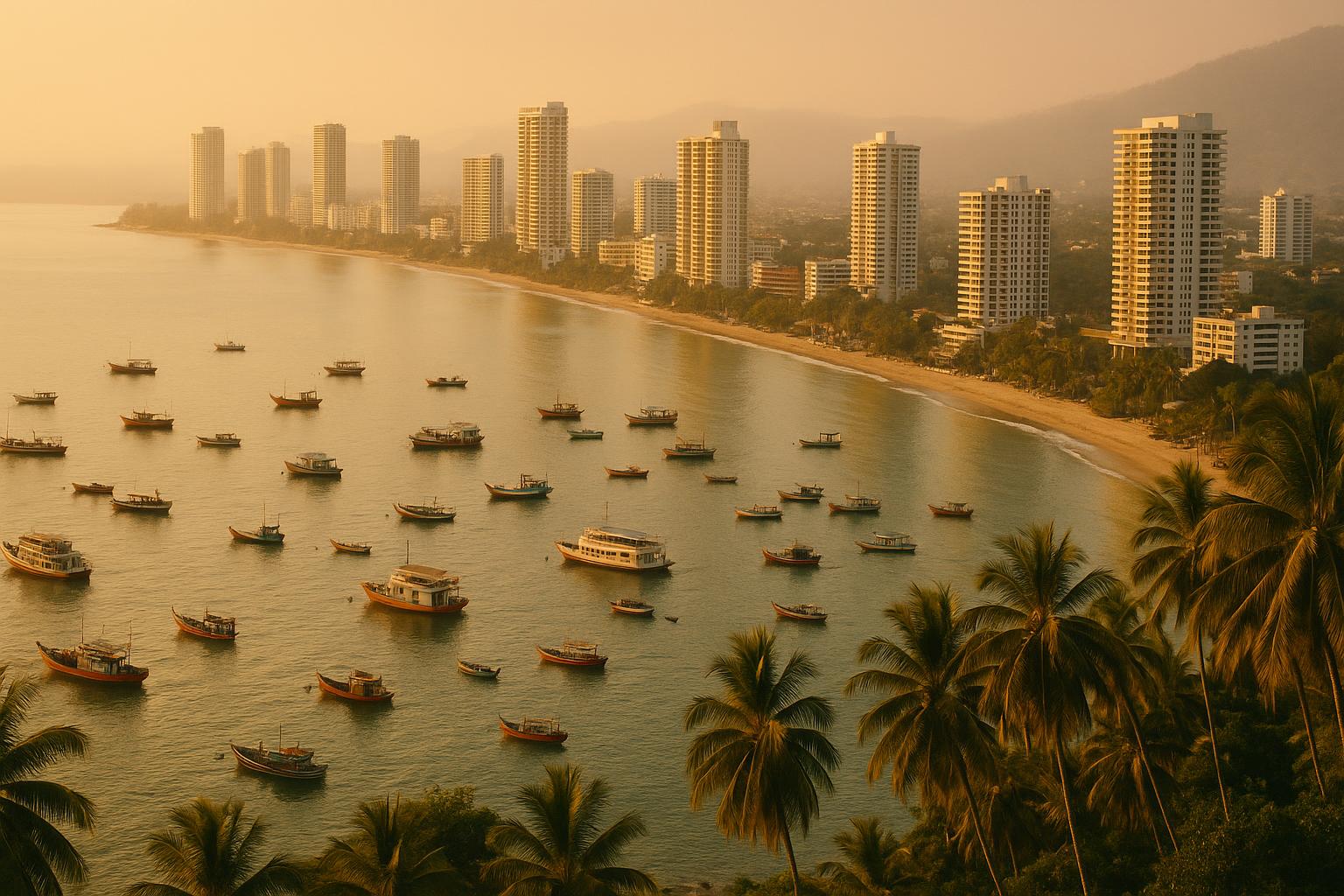
Pattaya gets written about more than almost any city in Thailand and understood less than most. The version that appears in international coverage is one street at night; the version most residents live in is a working coastal city of about three hundred thousand people with a fishing port at one end, a container economy up the coast at Laem Chabang, and a beach that fills with Thai families at the weekend.
This hub holds two kinds of page and they are deliberately kept apart. The news reports are dated, sourced and corrected as facts develop — read them for what happened. The guides are evergreen and get revisited on a schedule — read them for how the city works. If you only have time for one thing before you arrive, read the baht bus guide: transport is the single decision that changes what a day in Pattaya costs and where you can realistically go.
Hub last reviewed by the ThaiThuk desk. Individual pages carry their own published and updated dates.
The bay, north to south
Almost every argument about whether Pattaya is pleasant or unpleasant is really an argument about which part of it someone stayed in. The city runs along a bay, and the character changes every couple of kilometres. Pick the wrong end and you will have a completely different holiday from the person who recommended it.

| Area | Character | Suits |
|---|---|---|
| Naklua & Wongamat (north) | Quieter, older Thai-Chinese neighbourhood, the fishing port, the better hotel beaches | Couples, families, anyone wanting the bay without the strip |
| Central Pattaya | Shopping, the pier, the densest concentration of everything | Short stays, first visits, people who want to walk to it all |
| South Pattaya | Walking Street and its surroundings; loud, late, and the source of the city's international reputation | Nightlife, and nothing else |
| Pratumnak | The wooded hill between the two bays, small coves, residential | Repeat visitors who have decided they want quiet but not remote |
| Jomtien | A long straight beach road, family-oriented, a large resident expat population | Longer stays, swimming, a slower daily rhythm |
| Na Jomtien & Bang Saray (far south) | Genuinely quiet, increasingly upmarket, fishing village at the end | Anyone who wants the coast and not the city |
What a day here actually costs
Pattaya has an unusually wide gap between what a day can cost and what it does cost, and the difference is almost entirely transport and where you eat. The city has no rail transit; the shared songthaew network is the substitute, and using it correctly is the single biggest saving available to a visitor.
Riding a songthaew on its normal loop costs 15 baht for a short hop within one area and around 20 baht for longer runs. The expensive mistake is stopping one and telling the driver where you want to go — that converts the shared ride into a private charter and the price multiplies. Get on the back of one already moving in your direction, press the buzzer to stop, and pay at the driver's window. Our baht bus guide covers the routes properly.
On food, a plate at a Thai shophouse or market stall runs roughly 40–60 baht, against several times that on a beachfront tourist menu for the same dish. A basic fan room in a family guesthouse sits around 300–500 baht a night outside peak season. Those two choices, not the flight, decide your daily budget — the arithmetic is worked through in the 1,000-baht day breakdown.
Getting here from Bangkok
It is roughly 150km southeast of Bangkok and the journey takes about two hours in clear traffic, considerably more on a Friday evening.
Bus is the cheapest and the most reliable: frequent services run from Bangkok's Ekkamai terminal, which sits directly on the BTS, making it the easiest option if you are already in the city. Minivans are faster and less comfortable. A private taxi or transfer costs several times the bus fare but takes you door to door, which matters if you are arriving at Suvarnabhumi with luggage — the airport is on the Pattaya side of Bangkok, so a direct transfer avoids the city entirely.
Whatever you take, note that arriving by bus leaves you at a terminal on North Pattaya Road rather than in the middle of town, and you will need a songthaew for the last stretch.
Getting around and getting oriented
Pattaya has no rail transit. Everything below flows from that one fact — which is why the songthaew guide sits at the top of this hub rather than in a general travel section.
-
Pattaya baht bus (songthaew) routes, fares and how to ride
The Beach Road loop, Jomtien, Naklua and Soi Buakhao routes, current fares, how to signal a stop, and how not to accidentally charter the whole truck.
-
Pattaya or Jomtien: which side of the bay suits you
An area-by-area comparison of the two halves of the bay — beaches, markets, noise, and the kind of day each one produces.
First visit
Written for someone who has never been and is trying to work out whether the city is for them. It is not a list of the twenty highest-rated attractions on a booking site.
-
Things to do in Pattaya beyond the reputation
Airport transfers, getting around, the Sanctuary of Truth, Big Buddha, Koh Larn, Jomtien, the markets, rooftop bars and honest safety notes.
Money, seasons and the local economy
Two pieces of analysis rather than price lists. Both are dated, because prices in a tourist economy do not hold still and we would rather you knew when we looked.
-
The low-season paradox: fewer tourists, higher prices
Why Pattaya's rainy-season economics run backwards, what rises, and where value still hides.
-
Curry Row: how Indian visitors are remaking Second Road
The economic feature behind the restaurant boom — arrivals, wedding tourism, and a city doing what it always does: adapting.
Pattaya and Chonburi news reports
Newest first. Each report links the primary source it was built from and carries a published date and, where the story moved, an updated date.
-
Published 12 October 2026
Pattaya News: Cocaine Found in Condo Range HoodPattaya news: Chonburi Immigration finds 6g of cocaine in a Pattaya Thailand condo range hood and detains two Nigerian men with Walking Street links. Read on.
-
Published 9 October 2026
Pattaya News: Wanted Chinese Bank Manager Caught in CondoPattaya news: Immigration police arrest a Chinese fugitive wanted for a 27 million baht bank embezzlement after a 7-year Thailand overstay in a Pattaya condo.
-
Published 5 October 2026
Pattaya News: Cap Gun Fired at Squid Stall on Soi VCPattaya news: police and a theatre owner’s son stake out the shuttered Alangkarn Theatre in Na Jomtien and nab two suspected cable thieves. Thailand news.
-
Published 4 October 2026
Pattaya News: Theatre Sting Nabs Cable ThievesPattaya news: police and a theatre owner’s son stake out the shuttered Alangkarn Theatre in Na Jomtien and nab two suspected cable thieves. Thailand news.
-
Published 1 October 2026
Pattaya News: Two Indicted Over Russian Siblings' MurdersPattaya news: prosecutors indict two men on nine counts over the murders of Russian siblings and a Thai family in Chonburi. Latest Thailand news for visitors.
-
Published 30 September 2026
Pattaya News: Meth-Fuelled Toy Shop Hostage DramaA 32-year-old man high on methamphetamine locked himself inside a Nong Prue toy shop on 29 September 2026 and held a 31-year-old employee at knifepoint for about an hour. Police entered with a spare key while he was distracted, freed the woman with a minor hand cut, and arrested him.
-
Published 29 September 2026
Pattaya News: Friend Slashes Man Over 8,000 BahtA 20-year-old man was slashed on the neck and head with a knife at a Pattaya rooming house at about 3:46 a.m. on 26 September 2026 after a friend accused him of taking 8,000 baht. The suspect fled before police arrived, and Pattaya City Police have asked the victim to file a formal complaint so detectives can identify and arrest him.
-
Published 28 September 2026
Pattaya News: American's Secret Drug Lab BustedThai police raided a rented house in the Nong Prue area of Bang Lamung district, near Pattaya, on 25 September 2026 and found a concealed room converted into a drug laboratory. Officers arrested the man living there, a 42-year-old American national of Chinese descent identified only as Mr. Liu, and seized more than 60 grams of MDMA crystals, a quantity of ketamine, production equipment and packaging materials. Notes on Liu's phone reportedly listed mixing formulas and the names and addresses of intended recipients in Kuala Lumpur, Malaysia. Liu has been charged with possession of a Category 1 narcotic for sale and possession of a Category 2 psychotropic substance; he told police the drugs were for personal use, a claim officers have rejected given the quantity involved.
-
Published 24 September 2026
Pattaya News: Villa Raid Frees Three Women, Four Men HeldPolice in Banglamung, Chonburi, raided a two-storey villa near Pattaya shortly after midnight on 23 September 2026, after one of three Chinese women held inside secretly sent a WeChat SOS message with the property's location to a relative. More than 30 officers from Chon Buri Immigration, Bang Lamung Police, Tourist Police and district officials freed the women, one of whom was found chained inside a wardrobe, and arrested four Chinese men on charges including joint rape, unlawful detention and extortion. Two more suspects remain at large and none of the four held had a passport.
-
Published 23 September 2026
Pattaya News: Driver Chased Down After Drunken Hit-and-RunA woman, 35, allegedly drove a sedan into a parked motorcycle sidecar and a grocery store in Nongprue, Chonburi, on 19 September 2026, then struck a passing motorcyclist and fled. Residents and the shop owner chased her for more than three kilometres and held her until Nong Prue police arrived. Officers found an opened beer bottle in the car; the driver underwent a breath-alcohol test and the investigation is continuing.
-
Published 22 September 2026
Pattaya News: Wanted Chinese Gambling Boss Held in RaidThailand's Central Investigation Bureau arrested a 31-year-old Chinese national, identified only as Mr. Yu, at a housing estate in Huai Yai, Banglamung, on 19 September 2026. Police allege he founded and ran PAOFENG, a payment network accused of laundering close to one billion baht for illegal overseas gambling websites since 2018. The arrest came three days after a separate raid on a Nong Pla Lai luxury home detained Li Jianlu, a Chinese national wanted on an INTERPOL Red Notice.
-
Published 19 September 2026
Pattaya News: Foreigner Held After Dawn Attack on TeenPattaya police arrested an unidentified foreign man on 16 September 2026 after a 17-year-old Thai youth who stopped to help him search for a lost motorcycle key was punched in the face on South Pattaya Road. The arrest came in the same week that police detained two teenagers over a run of late-night robberies targeting foreign tourists in Jomtien and Pratumnak.
-
Published 14 September 2026
Pattaya News: Interpol Murder Fugitive Held After 30 YearsThai police arrested a Chinese national at a house in Nong Prue, Banglamung, on 13 September 2026 on an Interpol red notice and a Pattaya Provincial Court warrant. Investigators say the man, known locally as Suchart, bought a Thai national ID card in Tak province for about 50,000 baht and went on to accumulate 17 land plots in Banglamung worth more than 100 million baht.
-
Published 27 August 2026
Pattaya News: ‘Miracle Herb’ Scam Costs Tourist ฿15,000An Indian tourist told Muang Pattaya Police Station on 27 August 2026 that three foreign men approached him on Pattaya Second Road and sold him a herbal hair-growth remedy for 43,000 Indian rupees, about 14,799 baht, which a friend identified as inexpensive honey or coconut oil. The complaint is the latest in a documented pattern of “miracle herb” street sales targeting foreign visitors in Pattaya.
-
Published 22 August 2026
Pattaya News: DSI Raids Three Suspected Nominee NetworksOn 21 August 2026 the Department of Special Investigation, the Royal Thai Police and the Department of Provincial Administration searched three Pattaya premises — a law office, a condominium company and a hotel business — over suspected use of Thai nominee shareholders to hold property for foreign owners. The operation was led in person by the Justice Minister and the Deputy Interior Minister and forms part of a nationwide crackdown under the Foreign Business Act.
-
Published 22 August 2026
Pattaya News: Giant Bee Swarm Injures 17 at the Banglamung District OfficeA colony of giant honey bees nesting in a rain tree above the Banglamung district office complex in Naklua swarmed on the morning of 20 August 2026, injuring 17 people including 13 Banglamung School students, two vendors, a resident and a police officer who ran into the swarm to pull out a 71-year-old food seller. The nest was removed and destroyed the same day.
-
Published 16 August 2026
Pattaya News: Safe Code Theft Ends Near Walking StreetTourist police arrested a 36-year-old Ugandan woman in Pattaya on 14 August 2026 after she allegedly memorised the combination of an American tourist's in-room hotel safe in South Pattaya, emptied it while he was in the bathroom and fled towards Walking Street. About 40,000 baht in US notes was recovered during a body search and she has been charged with theft.
-
Published 13 August 2026
Pattaya News: Rider Hits Police Car in Crosswalk ChaosTwo Chinese tourists riding without helmets nearly struck pedestrians on the crosswalk outside Pattaya City Police Station at about 8.30pm on 11 August 2026. Stopped by traffic officers, they argued, tried to ride away and clipped a parked government vehicle. The rider faces charges of riding without a helmet, driving without a licence and damaging state property.
-
Published 9 August 2026
Pattaya News: Chinese Man Killed in Na Jomtien RoomCao Ke, a 20-year-old Chinese national, was found dead inside a rented room in Na Jomtien, Sattahip district, Chonburi, on the morning of 8 August 2026. A 20-year-old Thai vocational student, Thanachot Sripaenphet, surrendered later the same day with an abdominal wound and has been charged with intentional killing. A 21-year-old woman who rents the room was treated for cuts.
-
Published 6 August 2026
Pattaya News: Chinese Man Jailed 46 Years Over ArsenalPattaya Provincial Court sentenced Mingchen Sun, 31, to 46 years on 4 August 2026 for possessing military-grade weapons, nearly 5kg of C4, anti-personnel mines and radio jammers at a rented house in Huai Yai, Banglamung district. The cache was found after his car overturned on 8 May 2026.
-
Updated 1 August 2026
Pattaya News: Missing Russian Siblings Found Murdered, Thai Family Found in Second GraveDiana and Roman Nazimov were found in a shallow grave in Huai Yai. Two men have confessed, two are at large, and a second grave held a Thai family.
-
Published 28 July 2026
Thai News: Four Arrested in Pattaya Tourist RobberyPattaya tourist police announced the arrest of four suspects on 27 July 2026 over the assault and robbery of a 53-year-old Australian tourist in December 2025, seven months after the case went viral.
-
Published 28 July 2026
Pattaya News: Indian Tourists Freed From Ransom HouseThai police raided a two-storey townhouse in Nong Prue, Bang Lamung, on 27 July 2026 and rescued three Indian tourists who had been bound, beaten and held for ransom since 21 July after buying a cheap Pattaya tour package.
-
Published 26 July 2026
Pattaya's Fight Weekend: Tyson Fury, a Ring on the Sand, and a City Selling Itself to the WorldTwo fight nights on 24-25 July 2026: Tyson Fury at Max Muay Thai Stadium and a free Muay Thai card on Central Pattaya Beach. What the weekend was really selling.
Elsewhere on ThaiThuk
- Bangkok — The other city we cover most closely.
- Thai food — Dishes and regional cuisine, including where to eat in Pattaya.
- Thailand travel — Seasons, budgets and islands if Pattaya is one stop of several.