
ThaiThuk topic hub
Bangkok
Incident reporting from the capital, plus the street-food geography that takes years of eating to assemble.
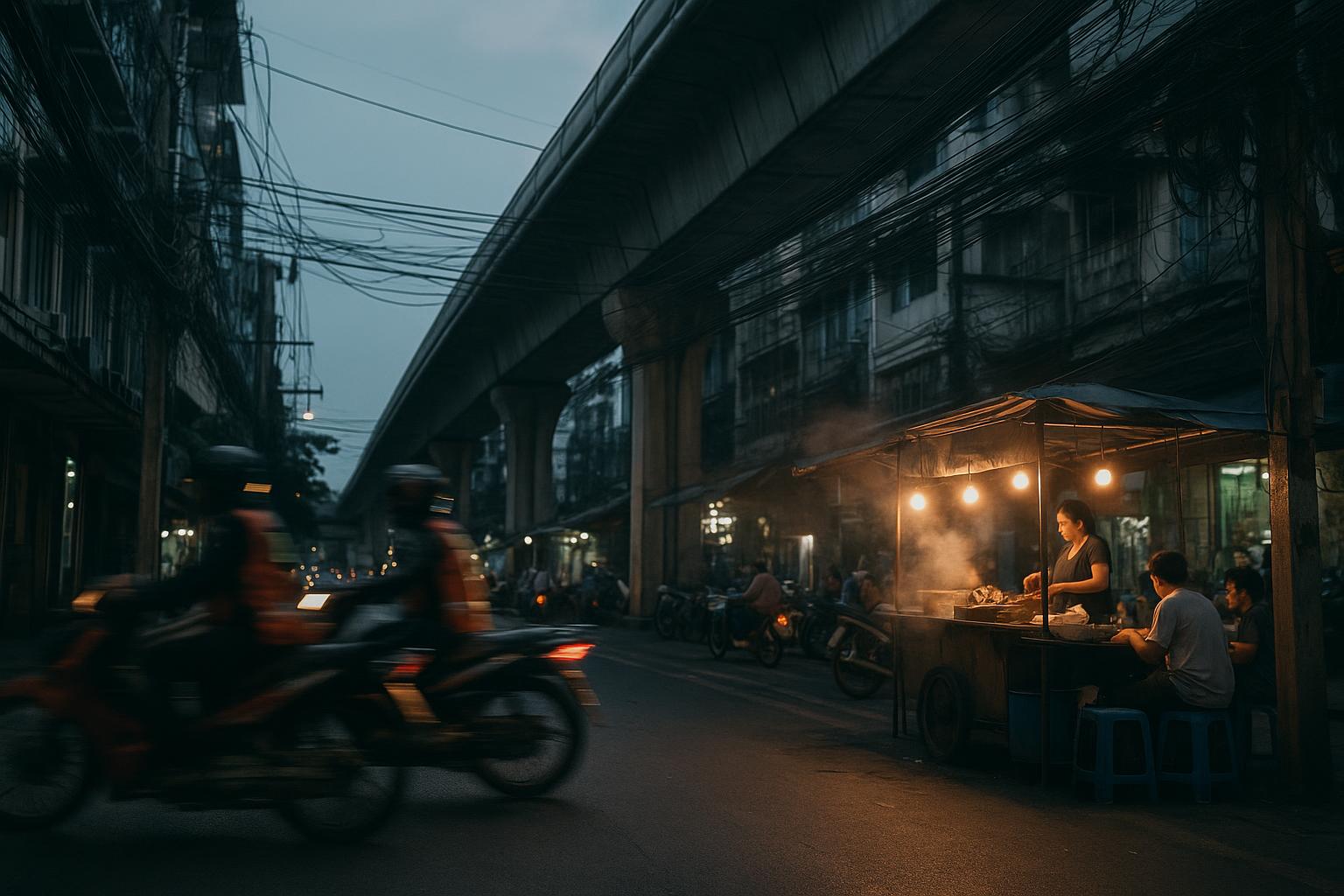
Bangkok is too large to cover as one place, so we do not pretend to. What we publish about the capital falls into two buckets: incidents we can verify against primary sources and follow through the courts, and food geography — which sois hold a real cluster of stalls, what time they wake up, and how to reach them without a car.
If you are planning eating rather than reading news, start with the food streets guide. It is organised by area and every entry carries directions from the nearest BTS, MRT or pier, because in Bangkok the transit stop is the address that matters.
Hub last reviewed by the ThaiThuk desk. Individual pages carry their own published and updated dates.
Bangkok has no centre. It has lines.
Almost every mistake a first-time visitor makes in Bangkok comes from looking for a city centre and booking a hotel near it. There isn't one. The old royal quarter around the Grand Palace is the historic core but almost nobody lives or works there; the commercial weight sits several kilometres east along Sukhumvit; the money sits south around Silom and Sathorn; and the river runs between all of it.
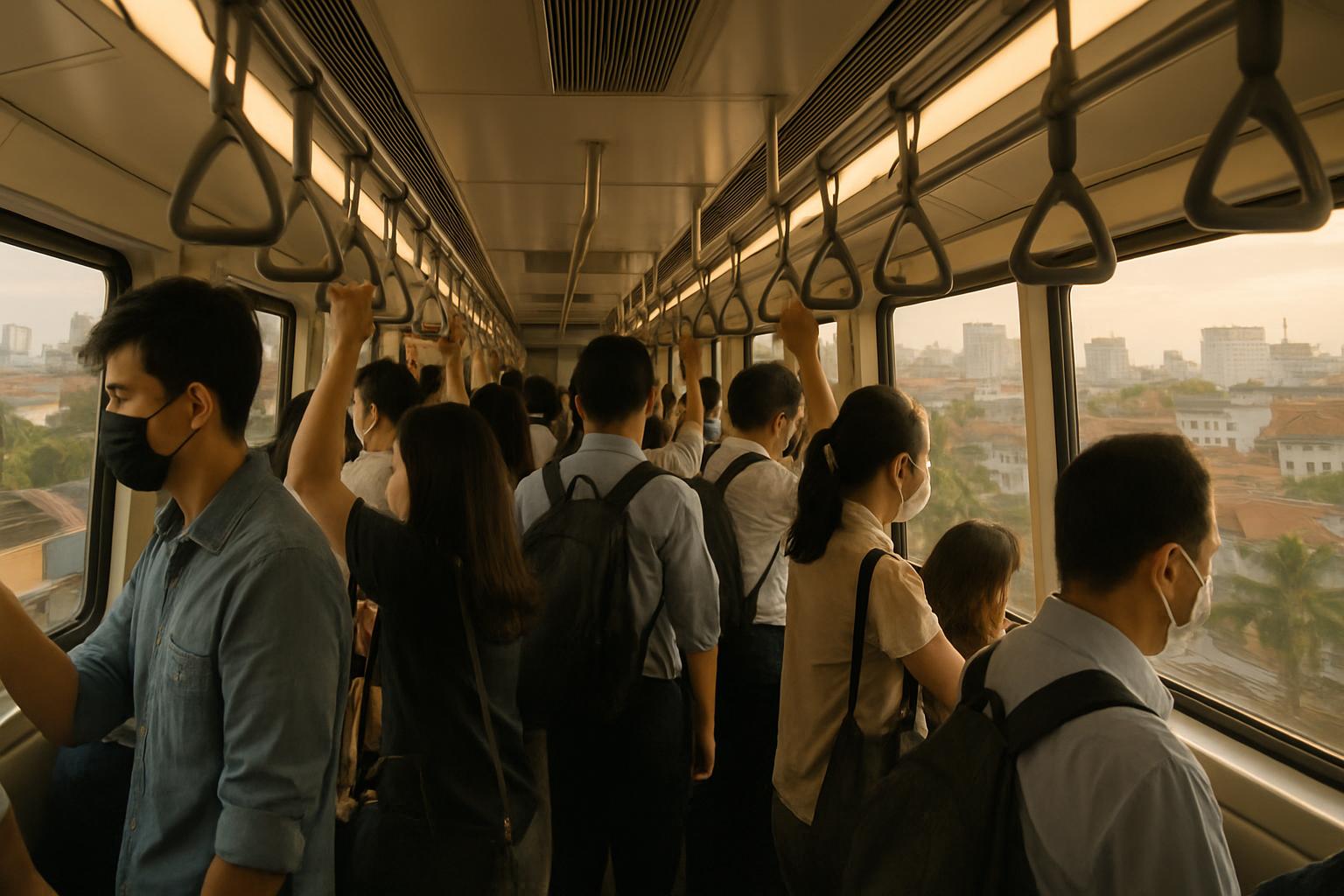
What actually organises the city is the transit network. The elevated BTS Skytrain and the underground MRT define where the city is easy, and everything outside a comfortable walk of a station is a different, slower place. Bangkok traffic is not a cliché — a three-kilometre taxi ride at 6pm can genuinely take fifty minutes, and the same trip on the BTS takes eight. This single fact should drive your accommodation decision more than the room, the pool or the price.
The practical rule: look up the nearest station before you look at the photographs. A plain hotel 200 metres from a Skytrain station will give you a better week than a beautiful one twenty minutes' walk from anything, because in this heat twenty minutes' walk is not a walk you will take twice.
The river is the second network and the one visitors forget. The Chao Phraya express boats run north–south past the old city, connect to the BTS at Saphan Taksin, and cost a fraction of a taxi. For the temples and the old town, the boat is not a tourist novelty — it is the fastest way there.
Where to base yourself
The districts below are the realistic shortlist. None is the 'best' — they suit different trips, and the difference between them is larger than the difference between hotels within them.
| Area | Suits | The trade-off |
|---|---|---|
| Sukhumvit (Asok to Ekkamai) | First visits, nightlife, easiest transit and the widest food range | Busy, heavily touristed, and the least Thai-feeling part of the city |
| Silom & Sathorn | Business trips, river access, walkable at night | Weekday-office rhythm; quieter than you might want at weekends |
| Riverside | Views, the express boats, big hotels | Poorly served by rail once you leave the boat line |
| Rattanakosin (old town) | Temples, the palace, the historic city on foot | No Skytrain, limited eating after dark, taxis stuck in traffic |
| Ari & Phaya Thai | Repeat visitors, cafés, living like a resident | Little in the way of sights; you are commuting to everything |
| Chinatown (Yaowarat) | Eating, street life after dark, atmosphere | Loud, crowded, and hot until very late |
Arriving: two airports, and they are not interchangeable
Bangkok has two. Suvarnabhumi handles most full-service long-haul flights and connects to the city by the Airport Rail Link, which is cheap, takes about half an hour to Phaya Thai and is immune to traffic. Don Mueang is the older airport north of the city and handles most low-cost carriers; it has no direct rail link of the same kind and a road transfer at the wrong hour can be punishing.
If you are connecting between the two on separate tickets, give yourself far more time than the map suggests. They are roughly 50km apart with the whole city in between.
For taxis from either airport, use the official public taxi rank and insist the meter is running. There is a legitimate airport surcharge added at the rank, plus tolls, which the driver may ask for in cash — that is normal. A flat fare quoted before you get in, by someone who approached you in the terminal, is not.
The rhythm of a Bangkok day
Plan around the heat and the traffic rather than the opening hours. Mornings before about 11am are the usable outdoor hours — temples, markets, walking. The early afternoon is for anything indoors and air-conditioned, and this is not laziness; the combination of temperature and humidity between roughly noon and 4pm defeats most visitors on day one and ruins day two.
In the May–October rainy season, expect a heavy downpour in the late afternoon rather than all-day rain. It typically clears within an hour or two, and it comprehensively breaks the traffic while it lasts. Build the afternoon around being somewhere you are happy to sit.
Avoid moving across the city between about 4.30pm and 7pm if you have anything to catch. If you must, take the train — that is exactly the window in which the rail network stops being a convenience and becomes the only sane option.
Eating in Bangkok
Area-led rather than dish-led. For the dishes themselves, the food hub is the better starting point.
-
Bangkok food streets: where the stalls cluster
Sixteen streets and sois from Victory Monument boat noodles to Yaowarat after dark, Wang Lang and the Silom Soi 20 morning market — with exact directions for each.
Bangkok news reports
Newest first, each with its source trail and dateline.
-
Published 11 October 2026
Bangkok News: Khao San Raid Finds Drugs, Minors, GunBangkok news: a Khao San Road nightclub raid finds 31 drug-positive patrons, 30 under 20 and a gun, and five Thailand police chiefs are moved. Full story.
-
Published 7 October 2026
Bangkok News: Meth and Cannabis Parcels Seized in PratunamBangkok news: two Maldivian men arrested in Pratunam with 2.37kg of crystal meth hidden in steel tumblers and 10kg of cannabis in kids clothes. Thailand news.
-
Published 3 October 2026
Bangkok News: Suvarnabhumi Baggage Chaos Strands 10,000 BagsBangkok news: floods strand 10,000 bags at Suvarnabhumi Airport. Thailand news on Thai Airways relief, delays, refunds and travel tips for your Thailand trip.
-
Published 2 October 2026
Bangkok News: EV Rams Yaowarat Shrine, 3 HurtBangkok news: an elderly driver faints and an electric car smashes through a Yaowarat shrine gate, hurting three worshippers. Thailand news and travel tips.
-
Published 25 September 2026
Bangkok News: Knife Rampage Hits Asok StreetA man armed with a kitchen knife injured four people and damaged shopfronts on Sukhumvit Soi 21 (Asok Montri Road) in Bangkok's Asok district on the morning of 24 September 2026. Police surrounded the area and detained the suspect, who reports describe as a Myanmar national, though this has not been officially confirmed. His motive is unknown; a witness account, not verified by police, suggested he may have been distressed after being unable to find his wife.
-
Published 3 August 2026
Bangkok News: Manhunt After Skywalk Assault Near BITECTwo Bangkok commuters say a Norwegian man kicked one of them, destroyed a mobile phone and threatened to kill them on the skywalk above Bang Na intersection on 1 August 2026. Police have taken a complaint at Bang Na Police Station but no arrest had been announced as of 3 August.
-
Published 26 July 2026
Two Tasers, Three Shots: How a Week of Warning Signs Ended in a Bangkok SoiA 34-year-old Frenchman died after Bangkok police shot him during a knife attack in Soi Phatthanakan 43, Suan Luang. Residents had reported a week of warnings.
Elsewhere on ThaiThuk
- Thai food — The dishes themselves, and Isan cooking.
- Pattaya — Two hours south-east, and a completely different city.
- Thailand travel — Getting between them, and when to come.