Nong Prue, Banglamung, Chonburi
Thirty years of ordinary life, ended by a warrant written in 1990
By Genext Information Systems Staff
Published 14 September 2026 • 6 min read
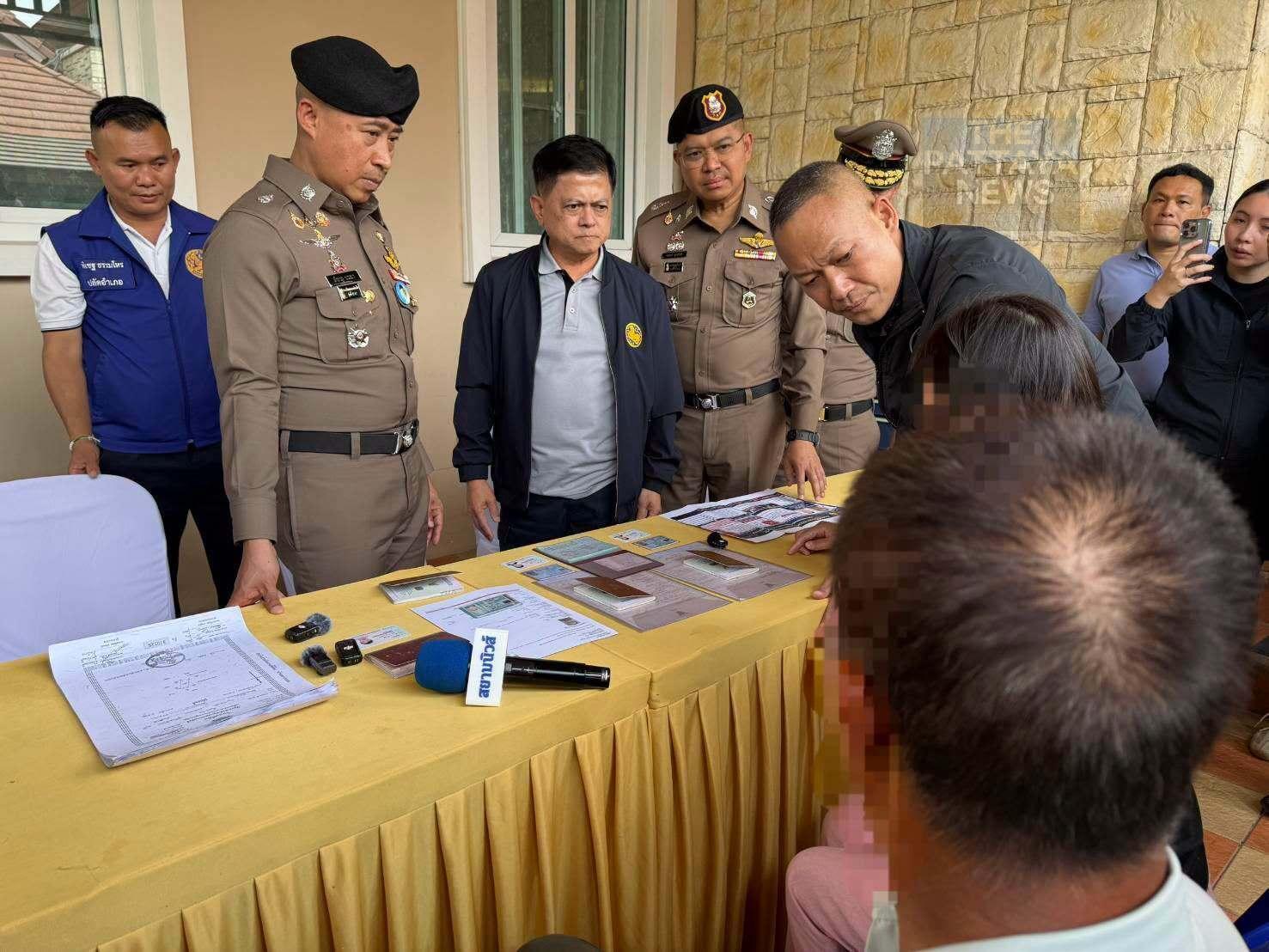
The biggest piece of Pattaya news this week is not something that happened on a Saturday night. It is something that did not happen for thirty-six years. On Sunday 13 September 2026, a joint Thai police task force walked up to a house in Nong Prue, in Banglamung district just inland from the Pattaya beachfront, and arrested a man his neighbours knew as Suchart.
Police say his name is Zhu — reported elsewhere as Zhu Zhishan — that he is a Chinese national, and that he has been the subject of an INTERPOL red notice arising from a case opened in Taizhou, Zhejiang province, on 19 January 1990.
What police say happened
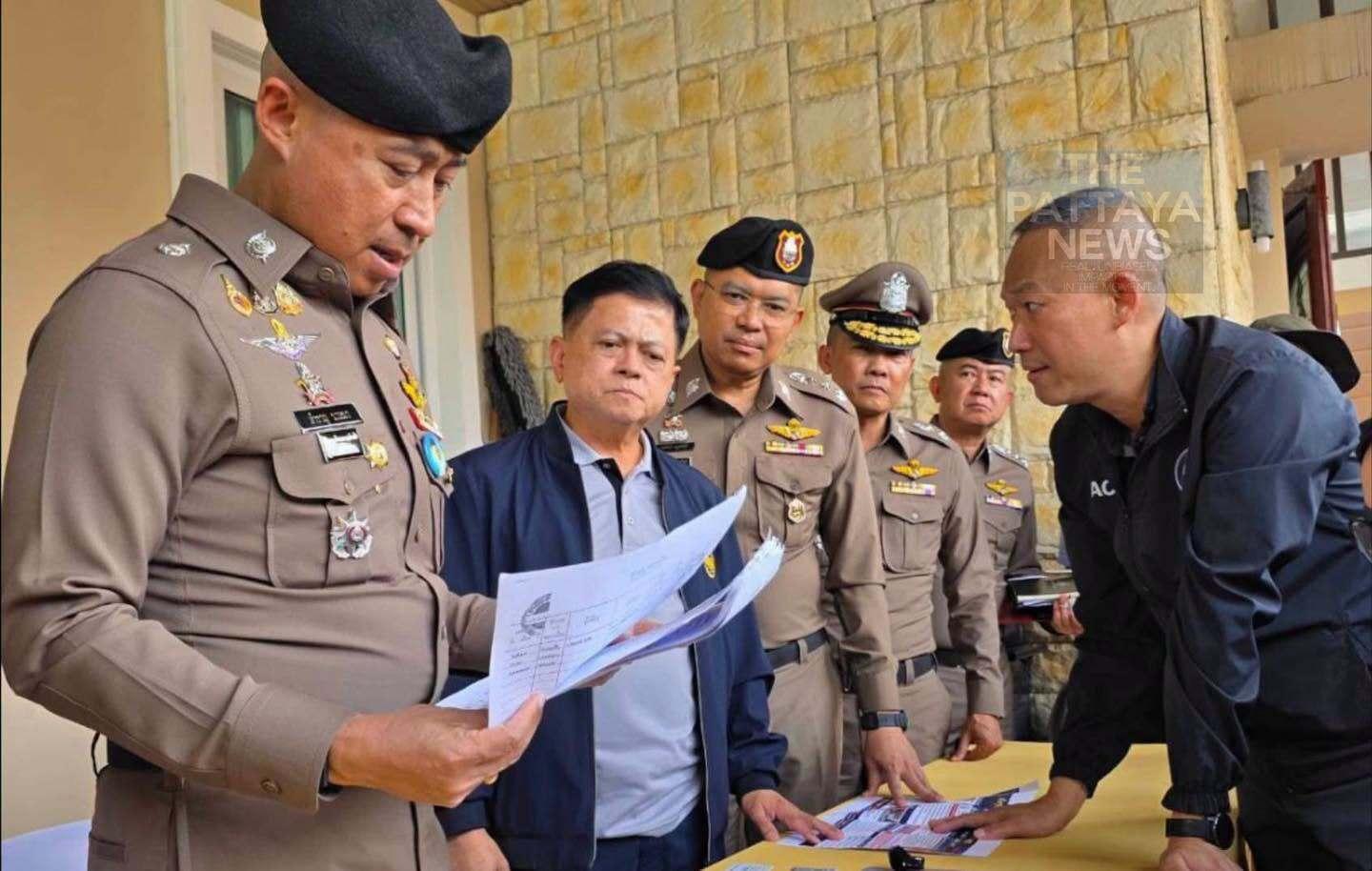
The operation was directed by Deputy National Police Chief Pol. Gen. Samran Nualma, with Pol. Lt. Gen. Noppasin Poolsawasdi leading the task force on the ground.
Officers executed a warrant issued by Pattaya Provincial Court — numbered 509/2569 in the Thai calendar — at the suspect’s residence. There was no chase, no stand-off and, by the accounts published so far, no resistance. He was at home.
The underlying allegation is old and, in the paperwork, narrower than the headlines suggest. Chinese prosecutors accuse him of intentional assault in Zhejiang in January 1990. The red notice that followed him across the border is what makes this an extradition matter rather than a purely Thai one.
According to investigators, he left China shortly after the incident, crossed into Thailand, and never left. He has been handed to Banglamung Police Station, where Thai charges relating to identity and immigration offences are being prepared. Extradition proceedings, coordinated with the Ministry of Foreign Affairs and Chinese authorities, are expected to follow.
None of the allegations has been tested in a Thai or Chinese court, and the suspect is entitled to the presumption of innocence on every count.

The case in numbers
- 19 Jan 1990 — date of the alleged offence in Zhejiang
- 36 years — between the case being opened and the arrest
- ฿50,000 — price police say he paid for a Thai ID card
- 17 — land plots held in Banglamung
- ฿100m+ — stated value of those holdings
- 509/2569 — Pattaya Provincial Court warrant number
A national ID card, bought for 50,000 baht
The part of this story that matters beyond one man is the document. Under questioning, police say, the suspect admitted paying roughly 50,000 baht for a genuine Thai national identity card issued in Tak province, on the Myanmar border. Some reporting places the transaction in Phop Phra district and dates it to 2001; The Pattaya News puts it more loosely at “decades ago”. That discrepancy has not yet been resolved on the record.
What is not in dispute is the effect. A Thai ID number is the master key to civil life here. It opens bank accounts. It registers companies. It allows a person to buy land in their own name — something a foreign national cannot ordinarily do at all. With that number, the man stopped being a fugitive and became a resident.
Why the border provinces keep appearing in these cases
Tak is not a random detail. Thailand’s western border districts have long-running, genuine caseloads of stateless and unregistered residents whose citizenship claims are real and difficult to document. That legitimate backlog is exactly the environment in which a fraudulent registration can be slipped through, because the paperwork trail for a genuine applicant is also thin.
Pol. Gen. Samran is now leading an inquiry into which officials or intermediaries processed the card, and whether the same route was sold to other foreign nationals. The Department of Provincial Administration has reportedly moved to revoke the registration. If the citizenship goes, the property ownership built on it goes with it.
From tour guide to 17 plots of Banglamung land
Once settled, police say, the man worked as a tour guide and then moved up into tourism operations of his own — the standard Chinese-market ladder in this part of Chonburi, where group travel, transfers, hotels and shopping stops are one interlocking business.
He married a Chinese woman and raised twin children. He was, in the entirely ordinary sense, a Pattaya businessman. Anyone reading Pattaya news for the last decade has met a dozen versions of him.
Investigators say he came to control multiple companies and, personally, 17 plots of land in Banglamung valued at over 100 million baht, along with cars and motorcycles. Those holdings are now being traced. Because Thai land ownership by an individual rests on that person actually being Thai, the legal status of every title is in question.
It is worth being precise about what this is and is not. There is no allegation of violence in Thailand, no allegation of trafficking, and no allegation connecting him to the organised nominee structures that Thai agencies have been dismantling elsewhere in the province. The charge from China is a 1990 assault. The Thai exposure is documentary.
Murder, or intentional assault?
Almost every English-language write-up of this arrest, including the first ones out of Pattaya, describes a red notice “for murder”. The same reports then state the underlying Chinese charge as intentional assault.
Both can be true. Under Chinese law, an intentional-assault charge that results in death is prosecuted at a homicide-level tariff, and red notice summaries routinely translate the Thai and Chinese source wording into the nearest English equivalent. But they are not the same allegation, and readers should know which one is actually on the warrant. We have used the charge as stated by investigators, and flagged the gap rather than papering over it.
What this says about living in Thailand as a foreigner
Thailand has spent 2026 tightening the paperwork around foreign residents and foreign money. Provincial administration has run digital cross-checks against citizenship records. The DSI has raided suspected nominee shareholding networks in Chonburi. Immigration has talked repeatedly about faster removal of foreigners who break the law.
This arrest is the clean illustration of why. It was not a tip-off or a raid that caught him. It was a database. A routine check matched a name against a record, and thirty years of careful ordinariness fell over in an afternoon.
For the overwhelming majority of people living in Thailand legally, that is reassuring rather than alarming. The lesson runs the other way: the shortcut is the risk. A retirement extension, a proper Thailand visa renewed on time and a company structured correctly are tedious, and tedious is the point. The people who get caught are the ones who bought their way around the tedium.
Does any of this change a Thailand travel guide?
Practically, no. A thirty-year-old extradition case has no bearing on a two-week holiday, and it says nothing about the safety of a city that handles tens of millions of visitor-nights a year. What it punctures is a lazy assumption — that Pattaya is a place where the past does not follow you. It does, and increasingly by database rather than detective work. That is the same shift visitors meet at the airport, where entry records, overstay history and previous refusals surface in seconds.
If you are planning the ordinary version of this city, our honest list of things to do in Pattaya runs from the Sanctuary of Truth to Jomtien’s night market, and our month-by-month guide to the best time to visit Thailand will do more for your trip than any crime report. Budget travel in Thailand still works the way it always has: cheap food, cheap buses, free beaches. None of that has changed this week.
What happens next
Three tracks now run in parallel. Banglamung police prepare Thai charges over the identity documents. The Department of Provincial Administration works through the revocation and, behind it, the question of who in Tak signed the original registration. And the Ministry of Foreign Affairs handles the extradition request from Beijing, which is the slowest of the three and the one most likely to take months.
The corruption inquiry is the thread worth following. One bought ID card is a crime; a route that reliably sells them is a system. If investigators can name the intermediaries, this stops being a curiosity in the Pattaya news cycle and becomes a much larger story about how identity is issued in Thailand’s border provinces. ThaiThuk will update this report as the case develops.
Do it the slow way
Get the visa right before you get here
Paperwork is boring and it is also the whole defence. Work out which Thailand visa actually fits your plans with ThaiVisaFinder, then price the trip properly with ThaiBudgetPlanner.
Find your visa →
Written by
Genext Information Systems Staff
ThaiThuk’s editorial team at Genext Information Systems — writers and long-term residents based in Thailand who report from the ground on Thai culture, travel, food and community. Every piece is checked against primary sources and updated as details change. More about ThaiThuk →
Sources
- The Pattaya News — “Chinese Interpol Fugitive Wanted for Murder Captured in the Pattaya Area After 30 Years on the Run”, by Goong Nang Suksawat, 14 September 2026, for the arrest, the officers named, the Pattaya Provincial Court warrant number, the 1990 Taizhou allegation, the 50,000 baht ID card admission and the 17 land plots.
- Chiang Rai Times — “Chinese Fugitive Arrested in Thailand After 30 Year Run”, by Jeff Tomas, 14 September 2026, for the suspect’s reported full name, the Phop Phra district detail and the 2001 registration date.
- The Thaiger — reporting of 13–14 September 2026 on the Nong Prue arrest and the alias used in Thailand.
- The Pattaya News (Thai edition) — “จับชาวจีน หมายแดง หนีคดีธาตกรรมเข้าไทยกว่า 30 ปีหปี”, for the Thai-language account of the same operation.
Note on photographs: the images on this page are real press photographs published by The Pattaya News (TPN Media) with its reporting on this arrest, reproduced here for news reporting with credit to that source. No AI-generated imagery is used. Note on detail: the suspect has not been convicted of any offence in Thailand or China and is entitled to the presumption of innocence. Where sources differ — on the year the identity card was issued, and on whether the red notice records murder or intentional assault — the discrepancy is stated in the text rather than resolved. Currency and asset valuations are those given by investigators. Nothing here is legal advice. This report will be updated as verified information emerges.