
News • Culture & Isan
Ubon's 125th candle procession reaches its final day
By Genext Information Systems Staff
Updated Thursday 30 July 2026 • 6 min read
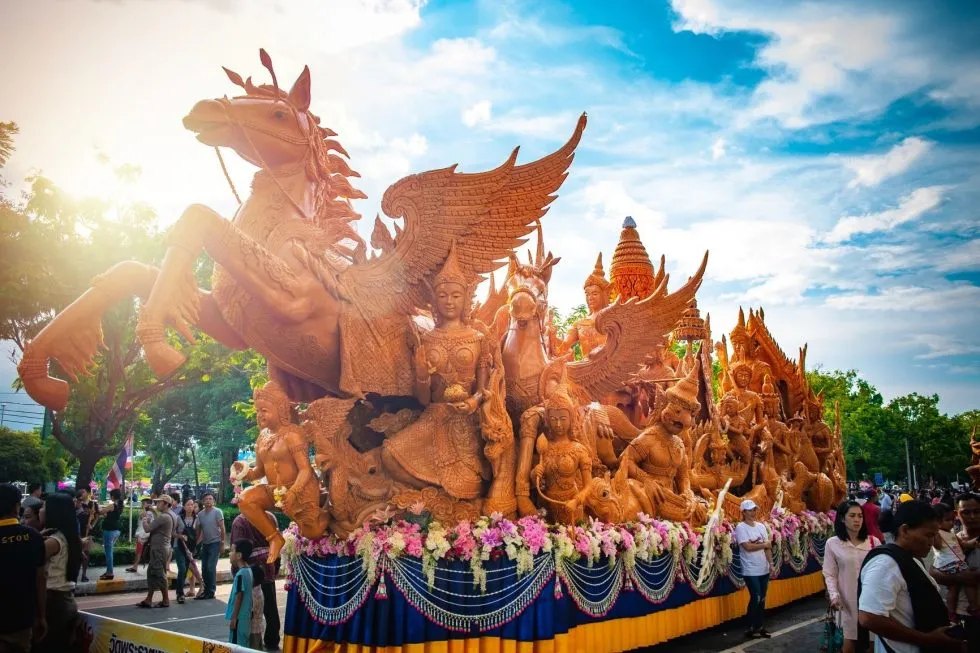
A carved-wax float on the parade route in Ubon Ratchathani.
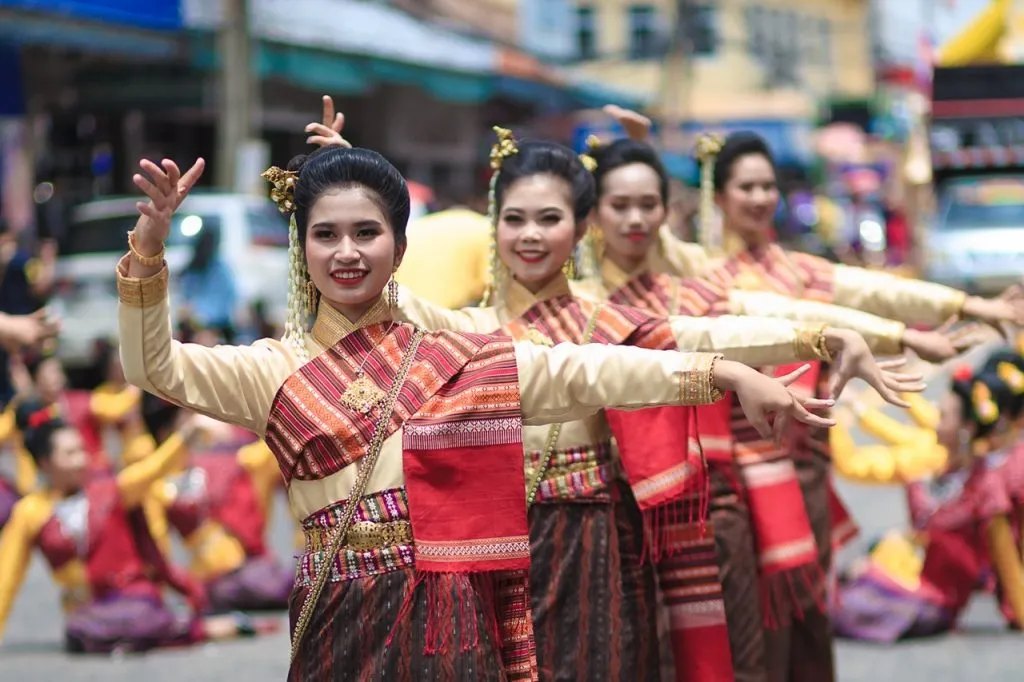
The 125th Ubon Ratchathani candle procession finishes today. The official opening ceremony began at 8.29am at Thung Si Mueang, and the second and final parade of carved beeswax floats is working its way along Uparat and Chayangkul roads through the middle of the city — naga serpents the length of buses, celestial dancers, episodes from the Jataka tales polished to something close to amber, moving at walking pace behind dance troupes and long drums.
Today is Wan Khao Phansa, the first day of the three-month Buddhist rains retreat, and the reason all of this exists. Candle competition awards are presented at 5.30pm, and the last of four light-and-sound productions runs from 7pm. If you are not in Ubon, the wax is not gone tomorrow — see the bottom of this piece.
What is different about this year
For the first time, the Tourism Authority of Thailand has given the procession its highest regional designation, naming the 125th edition a Signature Thailand Event. Ubon is one of three festivals to get the label this year, alongside the Nakhon Phanom illuminated boat procession and the Christmas star parade in Sakon Nakhon — all three in Isan, the northeastern plateau that holds about a third of Thailand's land area and a small fraction of its foreign visitors.
TAT governor Thapanee Kiatphaibool framed the designation as pairing the procession's cultural foundations with contemporary presentation, with the aim of broadening international awareness, keeping visitors in the region longer, and channelling the spending toward artisans and local businesses.
In practice that has meant a bigger production than the festival has staged before: four light-and-sound performances each evening on the 29th and 30th at Wat Si Ubon Rattanaram and Lan Khwan Mueang, free hands-on candle-carving and gold-leaf workshops at TAT's ART SPACE, illuminated installations across the park, and more than 5,000 complimentary seats at five viewing points along the route. The parade and the main festival grounds are free to enter.
Forty-seven wax pieces are in this year's display: one commissioned showcase candle and 46 competition entries across the three recognised categories — traditional, moulded-wax and carved-wax. More than 37 troupes from temple communities and schools across the province march with them.
Why candles at all
The festival marks two of the holiest days in the Thai Buddhist calendar. Asahna Bucha, yesterday, commemorates the Buddha's first sermon; Khao Phansa, today, begins the rains retreat, when monks stay put in their monasteries to study and meditate. For centuries laypeople have marked the retreat's start by donating candles to temples — originally a practical gift, so monks could read scripture through the long wet nights. Both days are public holidays, and alcohol sales are banned nationwide on both.
Ubon's contribution, more than a century ago, was to turn that humble offering into a competition. Villages and temples began presenting the most beautiful candle they could make, and the candles grew — first into carved pillars, then into the sculptural floats of today, some involving months of work and several tonnes of wax.
The artisans of the wax
In the weeks before the festival, temple courtyards across Ubon province become open-air studios. The craft has two schools, fiercely and cheerfully partisan. The carving school works like sculptors, chiselling figures from solid blocks of wax. The appliqué school works like jewellers: paper-thin sheets of wax are pressed into intricate moulds — flame patterns, lotus petals, naga scales — then layered onto the float piece by piece, tens of thousands of pieces per candle.
"People ask how we can spend two months on something that exists for two days. But the candle is not the point. The making is the merit." — a master carver at Wat Phra That Nong Bua, quoted in local press ahead of a previous festival
Masters pass the techniques to school groups and village teams, which is why a festival this elaborate has never needed to professionalise: it is still, at heart, neighbourhoods making offerings — just at a scale that stops traffic.
The quiet half of it
Last night, as dusk fell on Asahna Bucha, temples across the city held wian tian: worshippers circling the ordination hall three times clockwise, carrying a lit candle, incense and a lotus — one circuit each for the Buddha, his teaching and the monastic community. After the parade's drums and crowds, a few hundred candle flames drifting slowly around a darkened temple is the festival's other face, and for many visitors the one that stays.
If you missed the parade, the wax is still up
The floats do not disappear when the drums stop. The award-winning candles stay on display at Thung Si Mueang and the City Pillar Shrine through 1 August. The "Stories of Ubon Ratchathani" light-and-sound performance runs at Lan Thian Chaloem Phra Kiat on 31 July and 1 August at 6pm. Wax sculptures go on show at Wat Phra That Nong Bua from 3 to 17 August, and the illuminated candle-flower field at Ubon Ratchathani Zoo runs evenings to 31 July, with extended daytime hours from 25 to 30 August.
Getting there late is still viable: Ubon Ratchathani International Airport is an hour from Bangkok on five carriers, and the overnight sleeper from Krung Thep Aphiwat leaves around 9pm and arrives about 6.40am. Festival-week rooms have been triple price and largely sold out, but that pressure drops sharply from tomorrow — ThaiBudgetPlanner will confirm that Isan remains the best-value corner of the kingdom outside parade week. Dress modestly for temple visits, ask before photographing worshippers, and if a grandmother hands you sticky rice from her picnic basket — and in Ubon, one will — you know what to do.
Planning a wider Isan loop? Khon Kaen, Kalasin's dinosaur country and the Mekong towns of Khong Chiam all chain naturally onto Ubon — ThaiTripPlanner can help you rough out the route, and a head start on the script at ThaiLetters will let you read the temple names by the time you arrive.
A hundred and twenty-five years of practice, two months of wax, and a whole region's pride rolling through the streets at walking pace. Next year's, if you want to plan properly, falls in late July again.
Sources
- TAT Newsroom — TAT elevates 125th Ubon Ratchathani candle procession as a Signature Thailand Event
- Travelers Today — Night shows, 47 wax sculptures and the day-by-day 2026 schedule
- Royal Thai Government — Ubon Ratchathani Candle Festival 2026
- Tourism Authority of Thailand — Ubon Ratchathani destination guide
- Thai Holiday Guide — Khao Phansa & Buddhist Lent 2026