
News • Travel & Visas • Official Policy Update
Thailand's 30-Day Visa Rule for Indians: Approved, Not Yet in Force
By Genext Information Systems Staff
Published 16 July 2026 • Updated 31 July 2026 • 7 min read
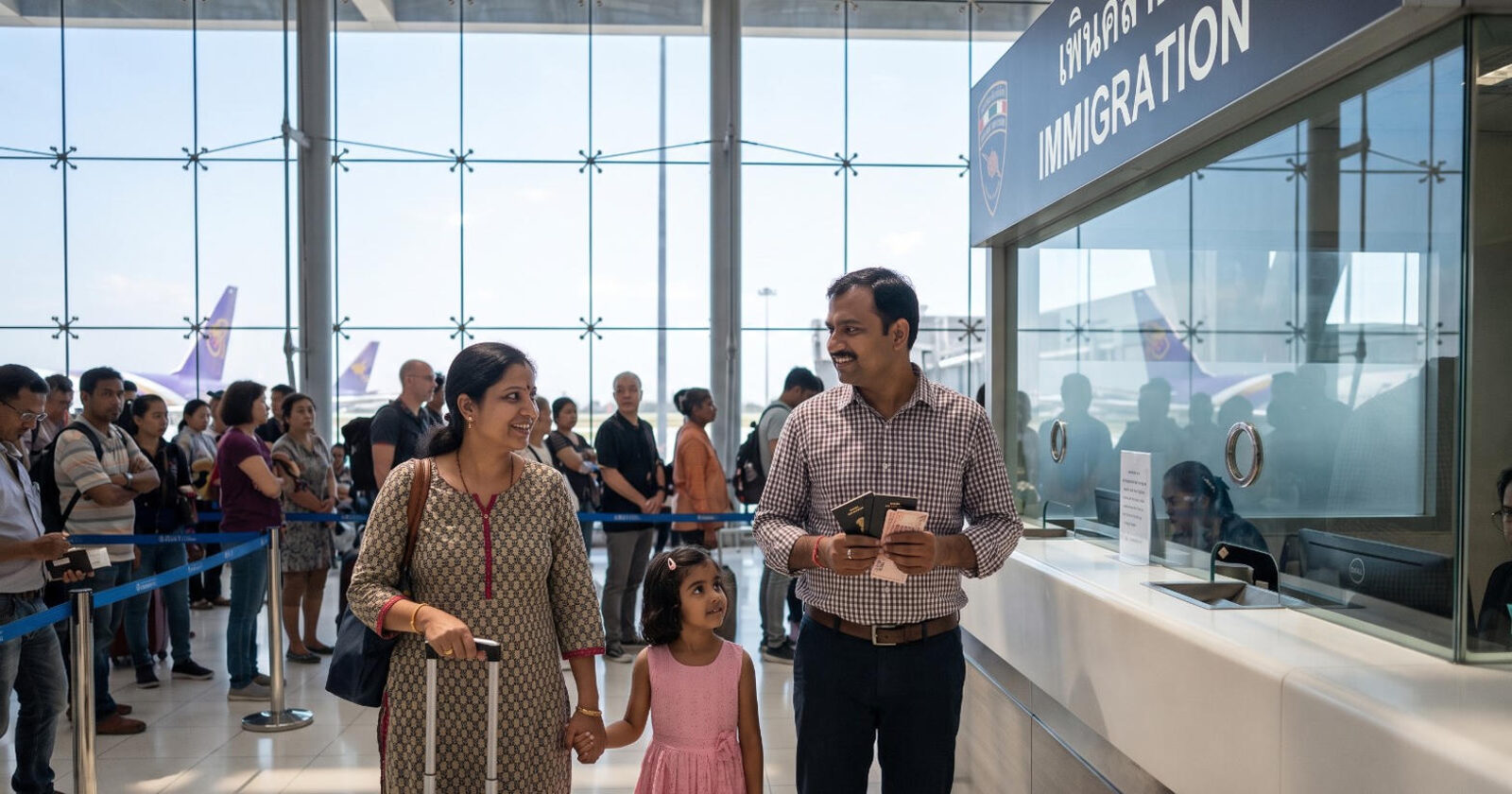
Arrivals at a Thai airport. For Indian passport holders, what changes is not whether they need a visa — it is the date the officer writes in the box marked “admitted until.”
Editor's note • 31 July 2026
An earlier version of this article described the change as a restoration of visa-free entry after Indian travellers had been moved onto visa on arrival. That was wrong. Indian passport holders were never actually moved onto visa on arrival at the border — a Cabinet framework approved in May 2026 proposed it, but it was never published and never took effect. This article has been rewritten against the primary sources listed at the end.
The headline you have probably read is that Thailand “restored” visa-free entry for Indians. It did not — because Indians never lost it. What the Thai Cabinet actually approved on 16 July 2026 is a reduction: Indian passport holders keep visa-free entry, but the maximum stay drops from 60 days to 30. And as of today, none of it has taken effect.
The single most important fact: nothing has changed yet
The Cabinet decision of 16 July covers five Ministry of Interior announcements. Those announcements must be published in Thailand's Royal Gazette, and they take effect 15 days after that publication. As of 31 July 2026, the Tourism Authority of Thailand has not announced any such publication.
Until it happens, the entry rules at Suvarnabhumi are exactly what they were last month: the 60-day visa exemption introduced in July 2024. If you are flying to Bangkok next week on an Indian passport, you will be stamped in for up to 60 days, as before.
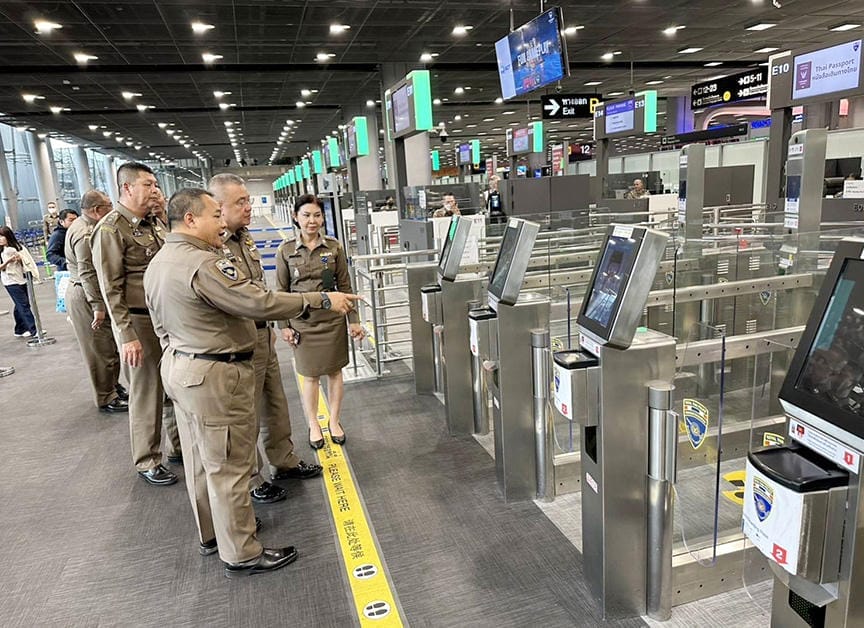
Immigration officials reviewing automated border channels. Cabinet decisions only become real for travellers once they reach officers like these — and that requires the Royal Gazette.
Was India ever on visa on arrival?
This is where most of the confusion comes from, and it is worth being precise about.
In May 2026 the Cabinet approved a plan to replace the 60-day exemption with a tiered framework. Under that plan, India would have been dropped into the Visa on Arrival category. That plan was reported widely — and it was never published in the Royal Gazette, so it never applied at any border post.
The 16 July decision revises those details before any of them took effect. Relative to the May plan, India moves up — from the Visa on Arrival category into the 30-day visa-exemption category. That is why the Tourism Authority of Thailand's own wording says India's eligibility “will shift from Visa on Arrival to 30-day visa exemption.” It describes a move between two proposals, not a change travellers ever experienced.
Compared with what is actually in force today, though, the direction is the other way: 60 days becomes 30.
Where Indian travellers actually stand
- Today: visa-exempt, up to 60 days. Unchanged until the Royal Gazette publishes.
- After the change: still visa-exempt, but up to 30 days. No visa, no visa-on-arrival counter, no fee.
- Start date: 15 days after Royal Gazette publication. Not yet published, so not yet known.
- If you are mid-trip: anyone who enters before the change keeps the full stay they were granted on arrival.
- Staying longer than 30 days: you will need a tourist e-Visa, applied for before travel.
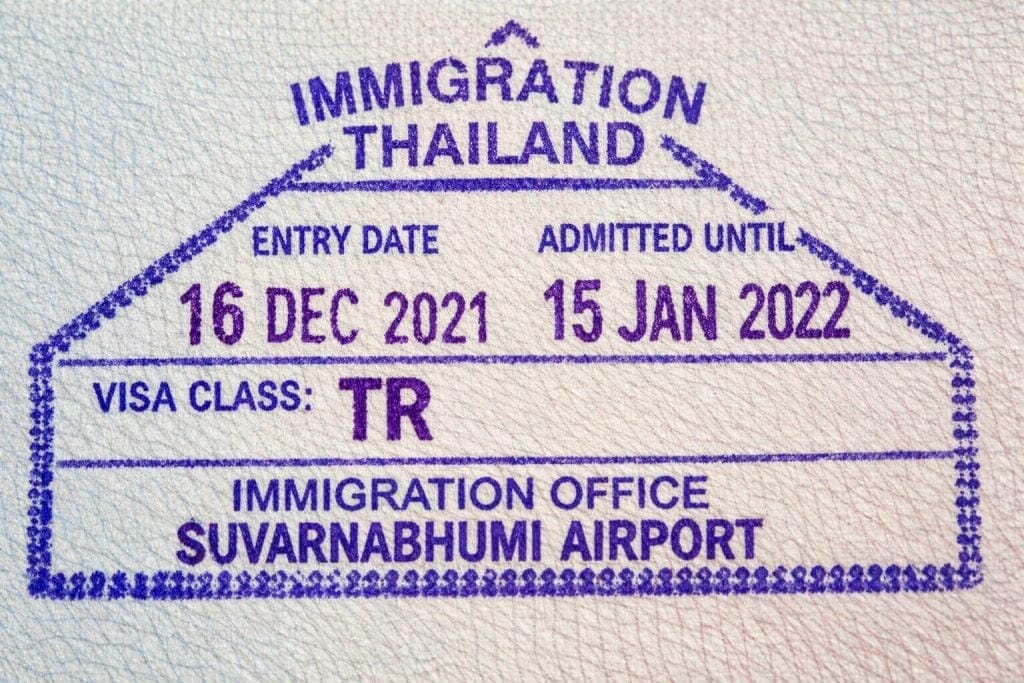
The two dates that matter. Visa-exempt entry is decided by the gap between “entry date” and “admitted until” — and that gap is what shrinks from 60 days to 30.
The framework in full
The approved measures work on a stated principle of one country or territory, one entry category, assessed on economic factors, security, international relations and reciprocity. In total 65 countries and territories are covered, sorted into three tiers:
| Category | Who it covers |
|---|---|
| 30-day visa exemption | 59 countries and territories — including India, the Maldives, Bulgaria, Croatia, Cyprus and Malta, plus all 27 EU member states on uniform terms |
| 15-day visa exemption | Mauritius and Seychelles |
| Visa on Arrival | Azerbaijan, Belarus and Serbia |
Separate bilateral arrangements continue to apply where relevant, giving exemption periods of 90, 30 or 14 days depending on the agreement. The EU harmonisation is not incidental: Thailand is pursuing Schengen visa exemption for Thai nationals, and treating all 27 member states identically strengthens that case.
Why India landed at 30 days rather than visa on arrival
Two reasons, and Thailand has been unusually open about both.
The first is economic weight. India was one of Thailand's five largest source markets in the first half of 2026, alongside China, Malaysia, Russia and South Korea. TAT cites India's importance in trade, investment and international relations directly.
The second is behavioural. The average Indian visitor stays around 7.17 days per trip. A 30-day allowance is more than four times the typical stay, which lets Thailand tighten the rules on paper while leaving almost every real Indian holiday untouched.
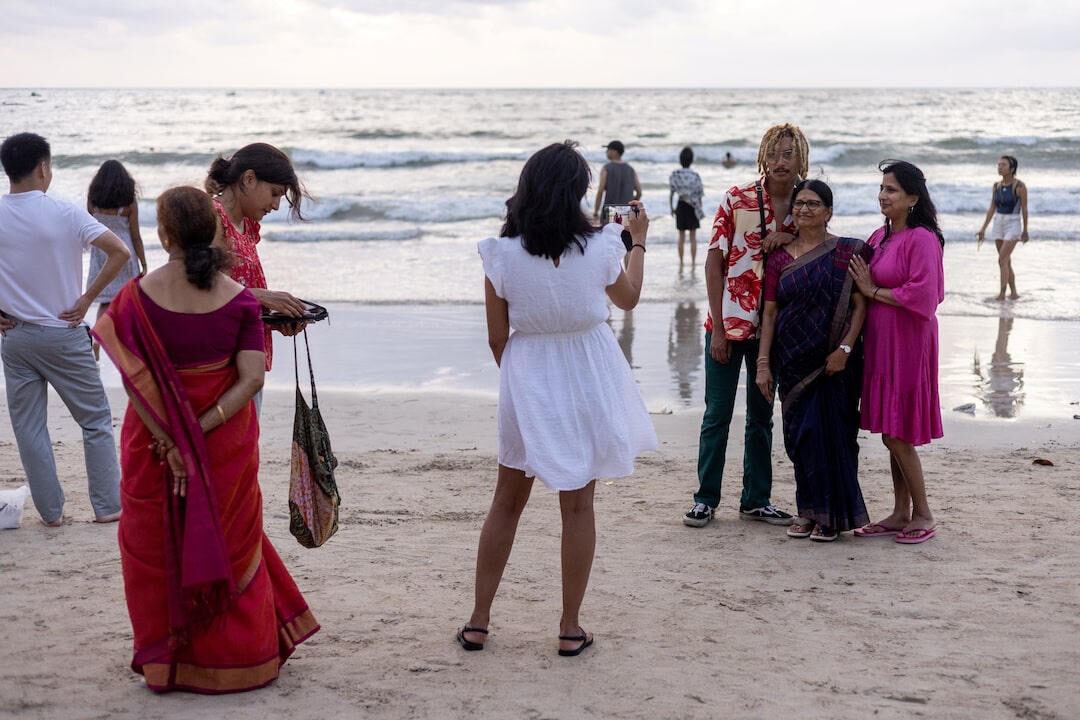
Indian visitors on a Thai beach. At an average 7.17 days per trip, a 30-day ceiling is generous for the way most Indians actually travel here.
There was also a commercial argument. Reporting on the May proposal — the one that would have imposed visa on arrival — coincided with a fall in Indian arrivals of close to 20 percent, according to Thailand's Ministry of Tourism and Sports. Industry figures argued the uncertainty itself was suppressing bookings, well before any rule had actually changed. Retaining a straightforward visa exemption removes that ambiguity.
What else is coming: the digital arrival card
Less discussed, but relevant at the counter: the same update commits security agencies to enhancing the Thailand Digital Arrival Card (TDAC) to support screening and verification of entry and exit records, with agency databases connected to allow risk assessment before departure. TDAC completion is already required by the Immigration Bureau, and travellers should continue submitting it through approved digital channels.

The short leisure trip — a week of markets, beaches and temples — is exactly the pattern the 30-day ceiling is designed around.
What it means for your trip
For the overwhelming majority of Indian travellers, this changes nothing practical. A one-week or two-week holiday fits comfortably inside 30 days, and there is still no visa to apply for, no fee to pay and no arrival counter to queue at.
It matters if your plans run long: an extended family visit, a slow-travel trip, a stay built around the 60-day allowance, or the kind of repeated back-to-back entries that prompted the tightening in the first place. If that is you, either travel before the change takes effect — the current 60-day stamp survives the transition — or apply for a tourist e-Visa through the official Thai e-Visa portal.
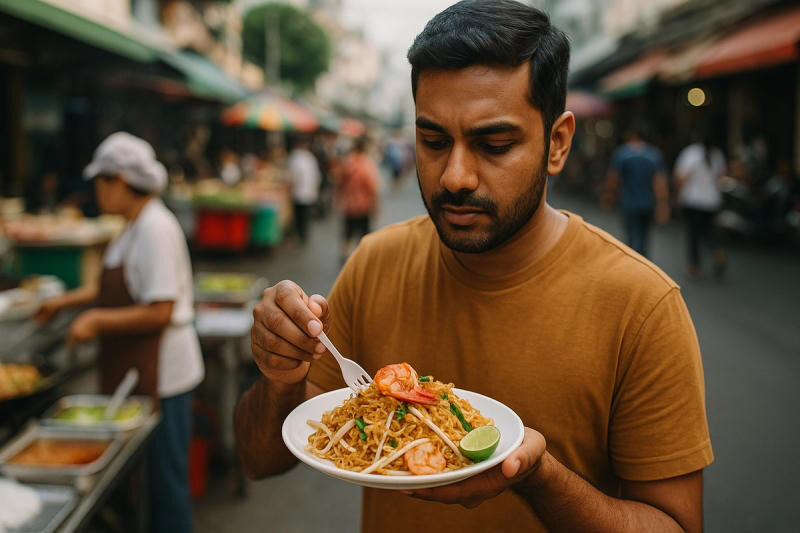
Nothing about the arrival process changes for a standard holiday — only the outer limit on how long you can stay.
One caution worth repeating: none of this creates new exemptions for nationalities that currently require a visa. Pakistani and Bangladeshi passport holders, among others, should continue applying for a tourist e-Visa before travelling. The measures reorganise existing categories; they do not expand them.
Sources
- Tourism Authority of Thailand — “Thai Cabinet approves updated visa measures pending Royal Gazette publication,” TAT Newsroom, 16 July 2026
- Nation Thailand — “Thailand revamps visa rules for 65 countries and territories”
- Travel Trade Journal — “Thailand retains visa-free travel for Indians; 30-day visa exemption awaits notification”
- Ministry of Tourism and Sports, Thailand — arrivals statistics, first half 2026
Status verified 31 July 2026. The authoritative per-country position is the published Ministry of Interior announcement text and the Thai Ministry of Foreign Affairs. We will update this article when the Royal Gazette publishes.