Food & Festivals • Bangkok Guide

Bangkok Food Streets: 16 Places Where the Stalls Cluster and the Food Stays Good

By Genext Information Systems Staff

Published 20 July 2026 • 12 min read
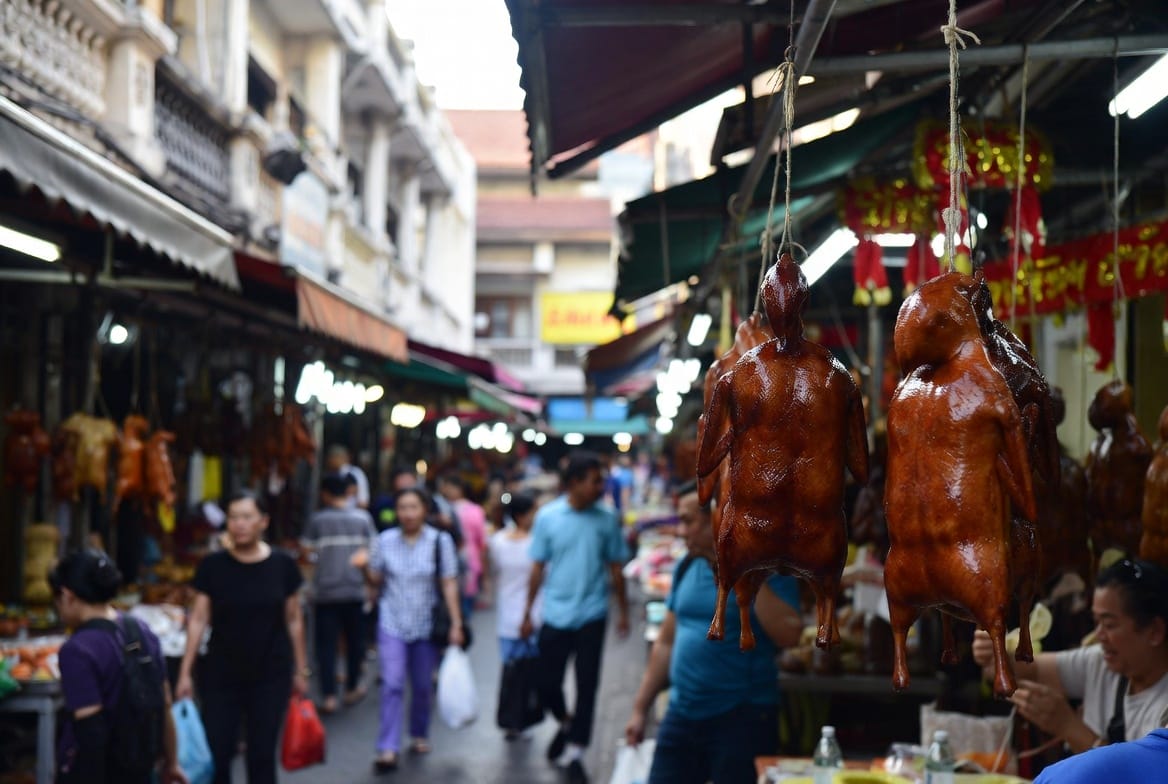
Roast ducks hanging in glass cases along Yaowarat Road in Bangkok's Chinatown
Bangkok • Street Food

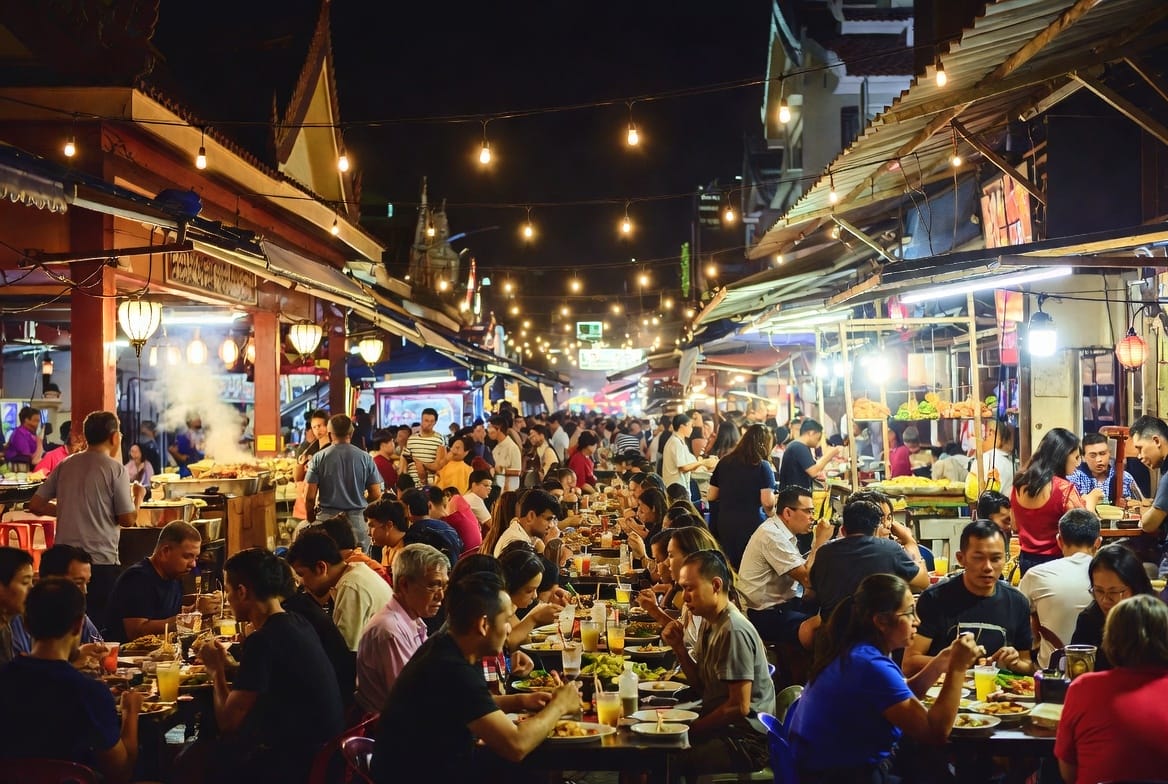
Bangkok does not hide its best street food in secret alleys. The strongest concentrations sit in plain sight — around transport hubs, old markets, hospital gates, university edges, and a handful of residential sois that simply refuse to stop feeding people.

These are those places. No ranking, no order of importance. Just the streets and pockets where you can walk in, look around, and start eating without needing a plan — plus exact directions for reaching every one of them, because in Bangkok the difference between a great food evening and a frustrating one is usually just knowing which BTS exit to take.

A pattern worth noticing as you read: the best clusters almost always sit next to something that generates steady daily demand — a skytrain interchange, a hospital, a university, a wet market. Tourists come and go; commuters, students and nurses eat every single day, and that is what keeps standards honest.
🗺️ How to use this guide

MORNING Silom Soi 20 • Wang Lang • Nang Loeng (weekday lunch)
DAYTIME Victory Monument • Ratchawat & Sriyan • Sam Yan • Tha Pra Chan
EVENING Yaowarat • Sukhumvit 38 • Rangnam • Petchaburi Soi 5 • Bang Khun Non
NO RAIL Ratchawat • Bang Khun Non • Nang Loeng — taxi or Grab, all worth it

Chaining two or three neighbourhoods into one day works brilliantly — pick one morning market, one daytime area and one night strip. If you're building Bangkok into a longer route around the kingdom, our ThaiTripPlanner lays it out day by day.

The full list

16 Streets & Pockets Worth Eating Through

Every entry includes exact directions. In no particular order — start wherever you're hungry.

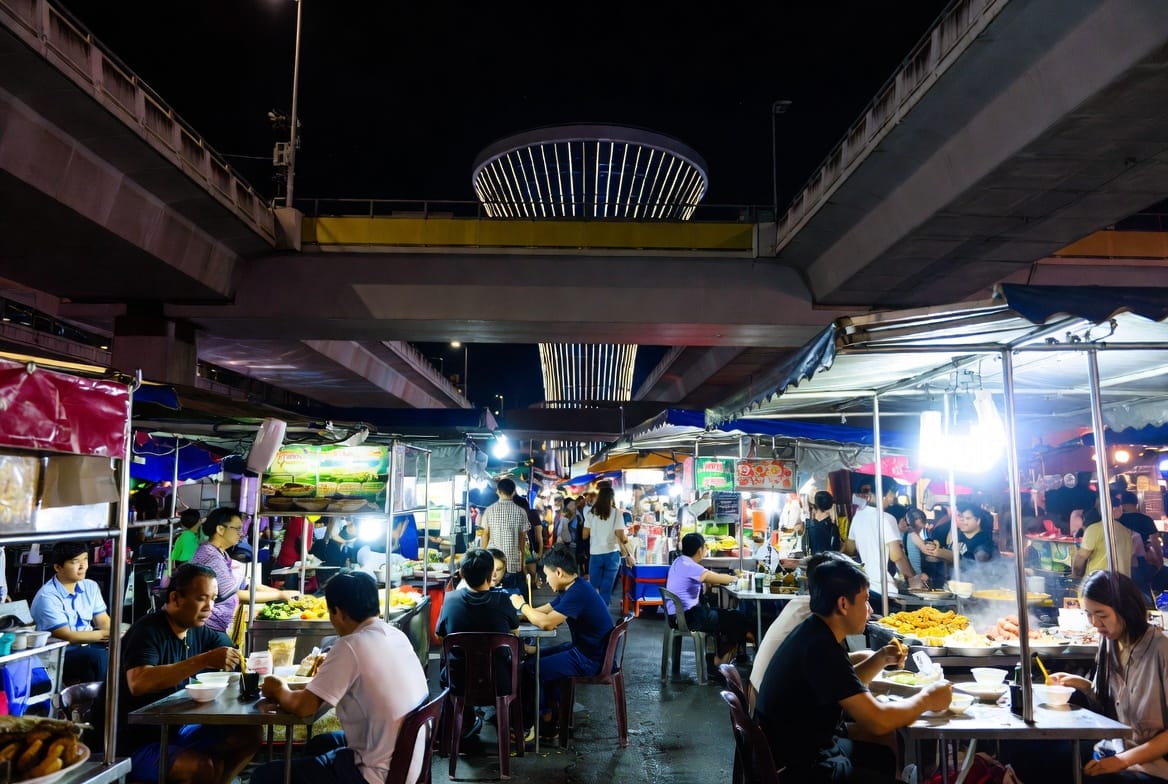
Food stalls and diners beneath the elevated roads near Victory Monument at night
01 • TRANSIT HUB

BOAT NOODLE CENTRAL

Victory Monument

Victory Monument is a pure transport machine. The BTS, dozens of bus lines and a constant flow of motorcycle taxis create a daily river of people who need to eat between connections — and that steady demand supports one of the densest clusters of functional street food in the city.

Boat noodles dominate. Several narrow alleys just off the roundabout specialise in them — dark, herbal broth, small bowls, the usual habit of ordering three or four at a sitting. Kuay jab appears frequently, as do grilled pork skewers, fruit shakes and the everyday stir-fries that keep office workers and students moving. Plastic stools, bright lights, the continuous sound of traffic circling the monument.

The highest concentration of stalls sits in the immediate orbit of the BTS exits. Walk the full circumference of the roundabout once and you will have seen the core of what the area offers; move more than about 150 metres from the station and the density drops fast.

Getting there: BTS Sukhumvit Line to Victory Monument, Exit 3 or 4. Both drop you onto the walkways ringing the roundabout — the best boat-noodle alleys are within the first 80–100 metres.

Peak hours: Late morning to late afternoon, with the transfer crowds
BTS ✓
Roast ducks hanging in a glass case as crowds pass along Yaowarat Road
02 • AFTER DARK

CHINATOWN • เยาวราช

Yaowarat

After sunset Yaowarat becomes one of the most intense food environments in Bangkok. The main road and the lanes running parallel to it fill with stalls, pushcarts, open-front shops and people. The competition is relentless — mediocre food does not survive long when another option is always visible twenty metres away.

Whole roast pigs and ducks hang in glass cases, seafood sits on ice, bird's-nest soup shops glow, and large flat pans of kuay teow kua gai crackle next to an almost endless run of noodle and rice dishes. The side streets often feel more interesting than the main road — tighter, smokier, and sometimes better. The air carries charcoal, hot oil and seafood all at once.

The strongest stretch runs from the Odeon Circle Chinese gate toward Wat Traimit and a little beyond. Walk the full length of Yaowarat Road at night, then come back through one or two of the parallel sois. Daytime is quieter and more market-oriented; the real energy arrives after dark and continues late.

Getting there: MRT Hua Lamphong, then a 10–12 minute walk — or any taxi or Grab to the Odeon Circle (the large Chinese gate). After dark you cannot miss it.

Peak hours: Sunset until late — this is a night place
MRT ✓
Stalls inside Ratchawat market in the Dusit district
03 • NEIGHBOURHOOD PAIR

DUSIT • TWO MARKETS, ONE ROAD

Ratchawat & Sriyan Markets

These two markets sit in a quieter residential part of Dusit and still run on a neighbourhood schedule. Sriyan is the more compact of the two; Ratchawat spreads a little further. Both combine a traditional wet market with a solid collection of cooked-food stalls and small open-air restaurants.

Roast duck is a regular feature, along with jungle curry, rice-and-curry shops and simple noodle places. The pace is slower than the big tourist or transit zones — people come to buy ingredients and stay to eat. The food feels everyday rather than performed, and the crowd stays mostly local.

Lunchtime is clearly the strongest period for cooked food; by mid-afternoon many stalls begin to close. If you want both markets, start at one, eat, then walk the ten to twelve minutes to the other.

Getting there: No direct BTS or MRT. Taxi or Grab from Victory Monument BTS takes roughly 10 minutes — ask for "Talat Sriyan" or "Talat Ratchawat" on Nakhon Chai Si Road.

Peak hours: Weekday lunch — arrive before 13:00
TAXI
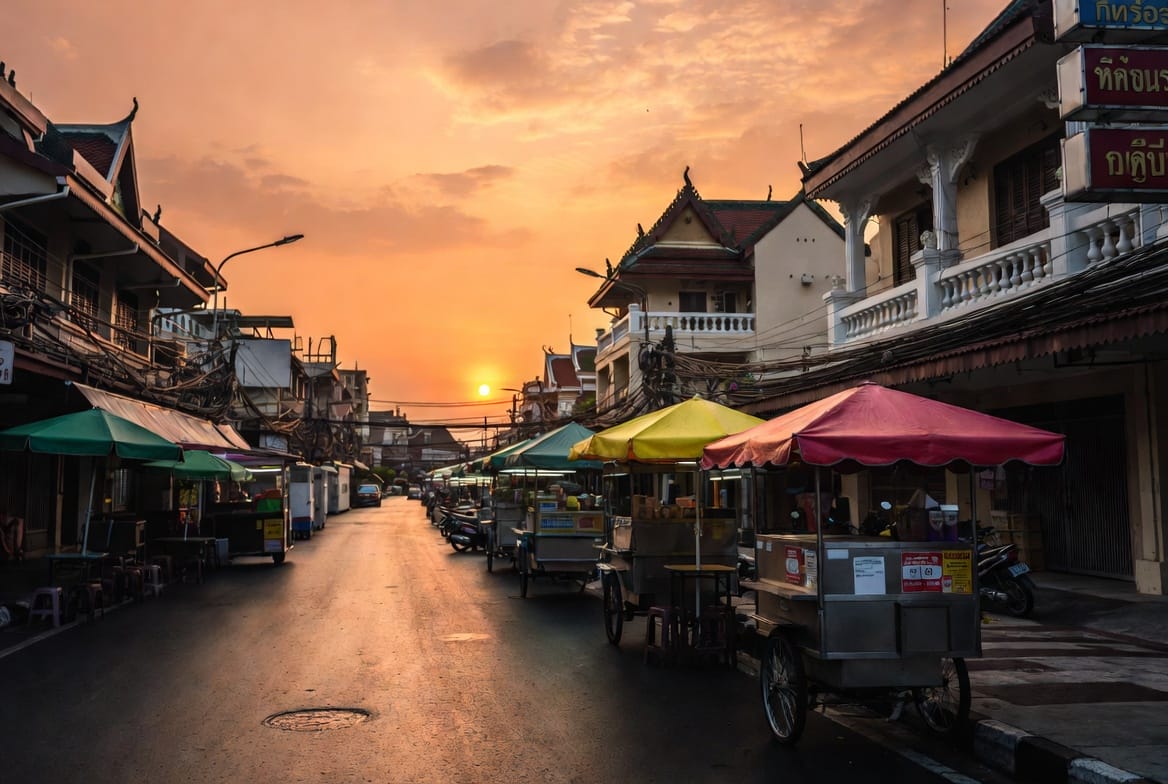
Street-food carts along an old shophouse street at sunset in the Bang Rak area
04 • OLD ROAD

RIVERSIDE HERITAGE

Charoen Krung & Bangrak

This stretch of Charoen Krung — Bangkok's oldest paved road — runs between the river and the ageing commercial buildings of Bang Rak. The food is a mixture of Thai-Chinese stalls, long-running Muslim restaurants and classic shophouse places. Boat noodles appear near the BTS, roast duck is common, and solid biryani sits a little further along the road.

The sidewalks stay active from late morning into the evening. Some of the better stalls sit slightly off the main road in the narrower connecting sois. The feeling is less frantic than Yaowarat but still purposeful — the area feeds office workers, residents and everyone moving between the river and the skytrain.

A practical route: start at Saphan Taksin BTS, walk north along Charoen Krung, explore two or three side streets, then loop back. The river is never more than a few minutes away.

Getting there: BTS Saphan Taksin, Exit 2 or 3, then walk north along Charoen Krung Road. Or arrive by Chao Phraya Express Boat at Sathorn (Central Pier).

Peak hours: Late morning through evening
BTS + BOAT
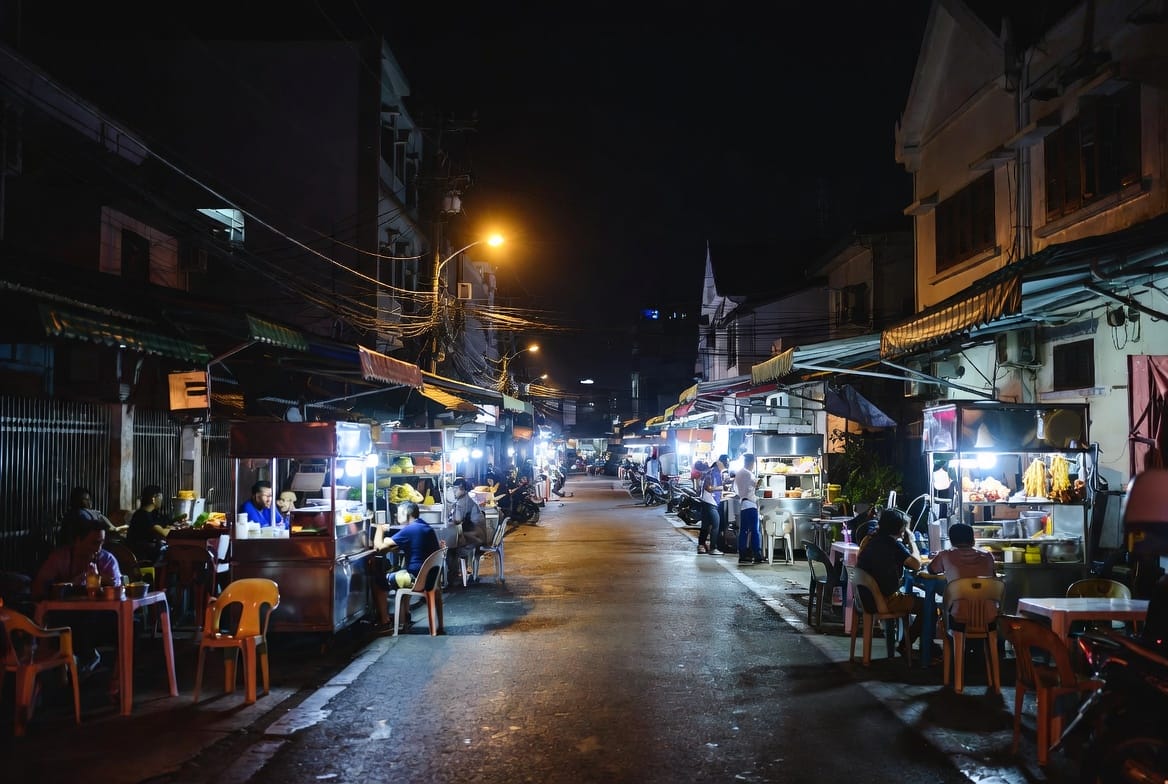
A quiet residential street in Thonburi lined with evening food stalls
05 • LOCAL SECRET

THONBURI • บางขุนนนท์

Bang Khun Non

Bang Khun Non is quieter and more residential than most of the better-known street-food zones, spread along a few local streets in the old Bangkok Noi district rather than one dramatic strip. Isan dishes are strong — som tam, grilled chicken, sticky rice — along with yen ta fo, pork leg over rice and the usual range of stir-fries.

Because the area is not a major tourist or transit hub, the stalls feel oriented toward people who live nearby. The atmosphere is calmer; you can sit without feeling watched or rushed, and the portions are straightforward and filling. Street food that still functions as neighbourhood infrastructure.

Evenings are more active than lunchtime. The absence of a nearby skytrain station keeps casual visitor numbers low — which is exactly why the place has kept its character.

Getting there: Thonburi side of the river; no rail nearby. Taxi or Grab — tell the driver "Bang Khun Non" or show the Thai name (บางขุนนนท์). Handy to pair with Taling Chan if you're already across the river.

Peak hours: Evenings
TAXI
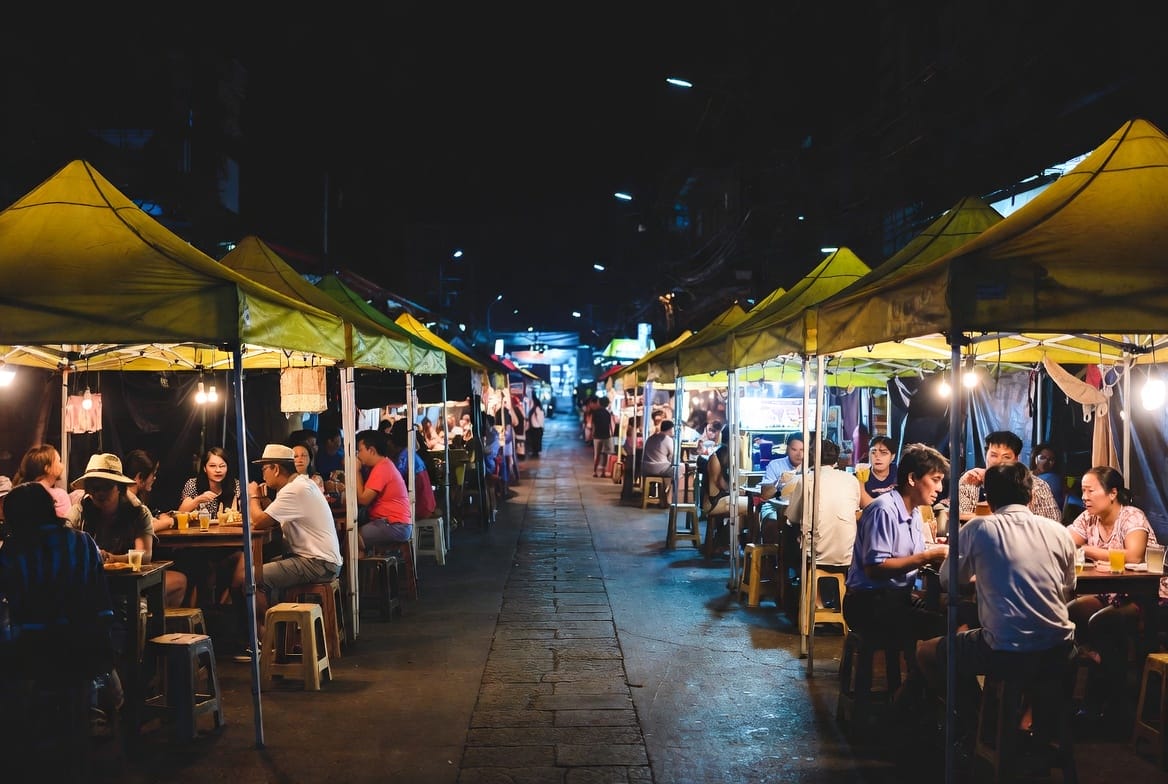
Food tents and tables filling a narrow soi after dark
06 • AFTER-WORK

RATCHATHEWI • SHORT & SWEET

Petchaburi Soi 5

Petchaburi Soi 5 is a short residential street that changes character in the late afternoon. By five or six o'clock the sidewalks fill with carts and small plastic-table setups. The crowd is mostly local — people leaving offices, residents from the surrounding buildings, a few students.

Noodle soups are the main draw, particularly the richer tom yum styles. Papaya salad, grilled meats and various takeaway rice dishes appear as well. The scale is small — you can walk the entire active section in a few minutes — and that compactness keeps the experience pleasant.

It is one of the easier central places to visit if you are already around Ratchathewi or Pratunam: a short walk, a clear turn, and you're eating.

Getting there: BTS Ratchathewi, Exit 3. Cross Phetchaburi Road at the lights, turn left, and take the first major soi on your right.

Peak hours: From about 17:00 into the evening
BTS ✓
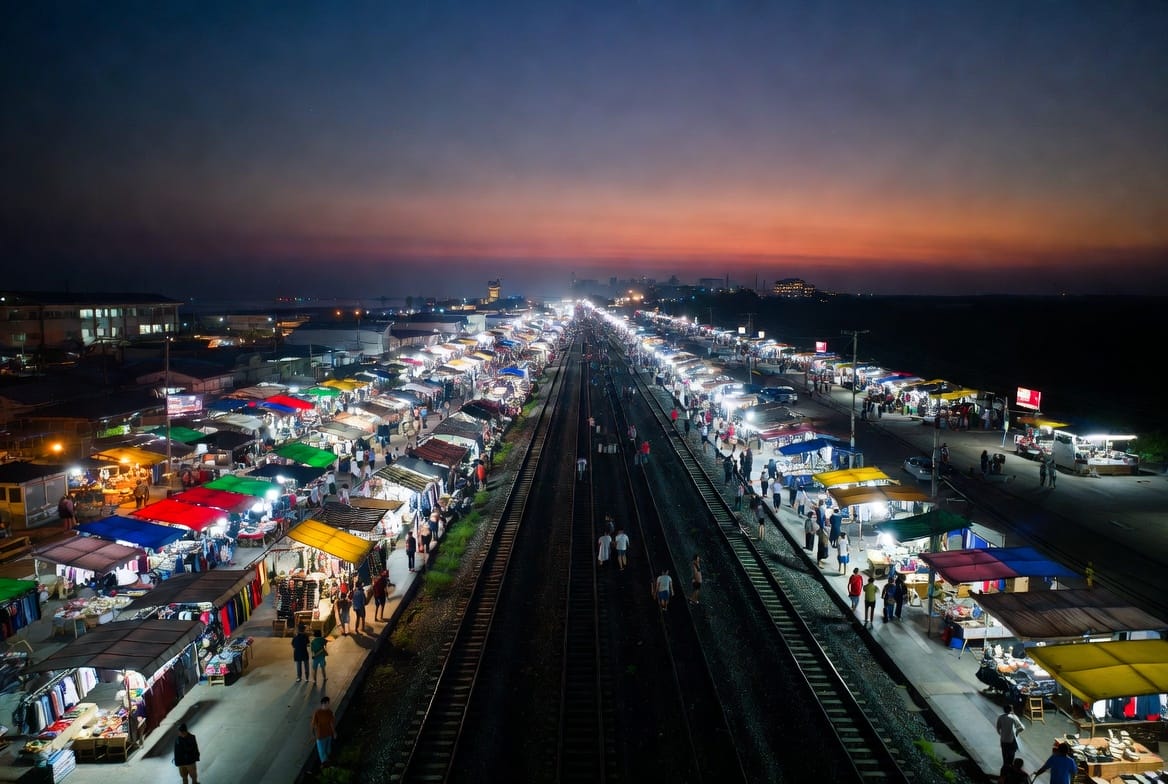
Market stalls glowing at dusk beside the railway tracks at Talat Phlu
07 • RAILSIDE

THONBURI CLASSIC • ตลาดพลู

Talat Phlu

Talat Phlu has kept a strong local identity even after the BTS made it easy to reach. The market and surrounding streets support a wide range of stalls, several with quiet reputations for specific dishes — sticky rice with durian, steamed fish with lime and garlic, and certain seafood preparations.

The railway tracks that still run through the zone create an unusual, slightly broken geography: stalls and small shops sit on both sides of the rails and in the spaces between. Daytime has a classic market feeling; evenings bring more cooked-food activity.

The overall energy is less frantic than the central tourist zones and more clearly rooted in regular customers. Once you are among the stalls, the density makes it easy to keep moving and tasting.

Getting there: BTS Talat Phlu (Silom Line), then roughly a ten-minute walk toward the older market area — the railway tracks are your landmark.

Peak hours: Market by day, cooked food in the evening
BTS ✓
Diners at sidewalk tables under lights along Rangnam Road in the evening
08 • EASY EVENING

VICTORY MONUMENT'S CALMER SIDE

Rangnam

Rangnam occupies a middle ground. It has hotels, a few bars and a slightly more polished surface than pure residential streets, yet the evening food stalls remain properly local. Isan food is well represented, along with grilled meats and occasional seafood.

The road is wide enough that the stalls never feel cramped. People sit at tables along the sidewalk and the pace is more relaxed than at the Victory Monument roundabout itself. It works well as a second stop once you've had your boat noodles at the monument and want to keep eating without travelling far.

Evenings are clearly stronger than lunchtime, and the walk from the BTS is so short that this is one of the lowest-effort food streets in the city.

Getting there: BTS Victory Monument, Exit 2. Walk straight ahead, then turn left onto Rangnam Road — a few minutes at most.

Peak hours: Evenings
BTS ✓
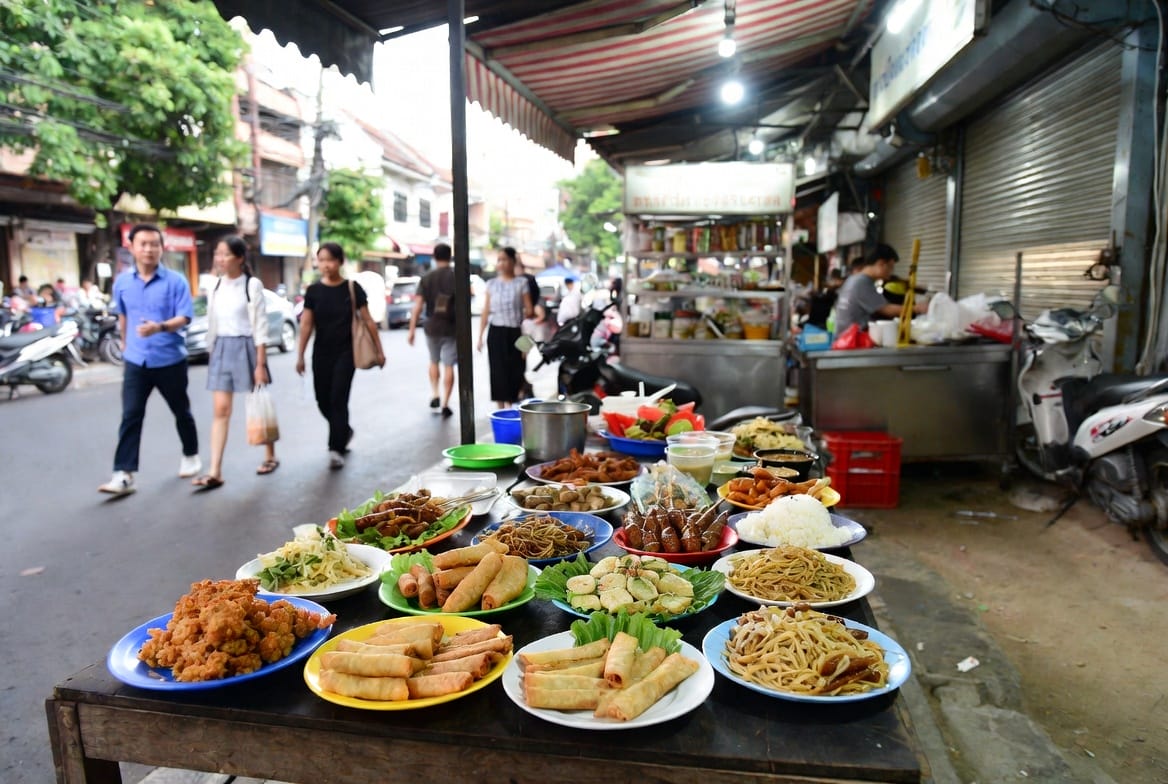
Plates of familiar Thai street dishes displayed at a Sukhumvit 38 stall
09 • BEGINNER-FRIENDLY

THONG LO'S STREET-FOOD GATEWAY

Sukhumvit 38

Sukhumvit 38 is one of the most approachable street-food concentrations for people still getting used to eating this way in Bangkok. The stalls line up in relatively orderly fashion under tents and awnings, seating is straightforward, and the dishes are the familiar ones — som tam, pad Thai, basil pork with rice, grilled chicken, sticky rice.

It sits in a part of the city thick with hotels and restaurants, so the crowd is mixed. That softens the pure local feeling, but it also means the place stays active and easy to navigate. The food is consistent rather than surprising — a reliable place to land when you want a proper street meal without having to search.

Stalls usually appear in the late afternoon and run late into the night. Simple to reach, simple to leave.

Getting there: BTS Thong Lo, Exit 4. Down the stairs, U-turn under the tracks, and walk a short distance into Soi 38 — the main cluster is on your left.

Peak hours: Late afternoon until late night
BTS ✓
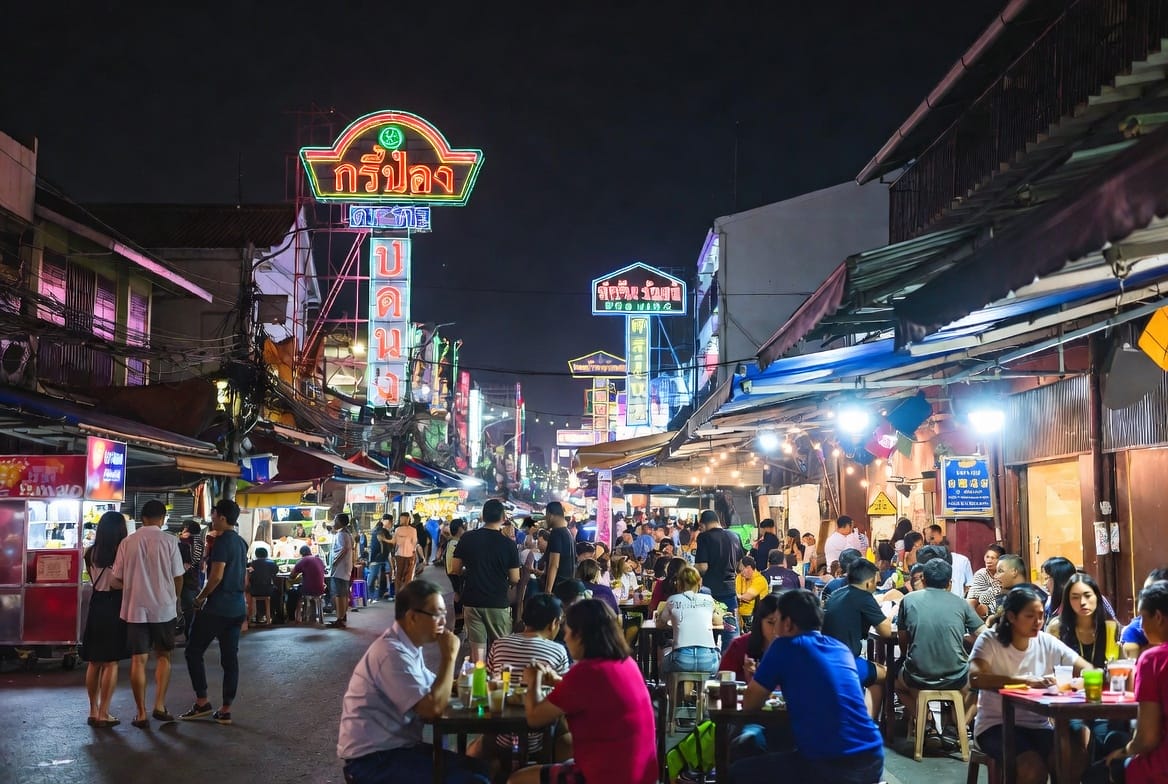
A lively Banglamphu street at night with signs, stalls and sidewalk tables
10 • OLD CITY

BY THE RIVER • BEYOND KHAO SAN

Tha Pra Chan & Banglamphu

This is one of the older parts of Bangkok and the food reflects that history: long-running shophouse restaurants, dessert carts, snack stalls and small rice-and-curry places, layered together in a way the newer street-cart zones can't match.

Walking the streets between the river and the Democracy Monument area turns up a steady sequence of places to eat. The more interesting options often sit in the smaller sois rather than on the obvious tourist routes — the better food is generally not on Khao San Road itself. Students, civil servants and long-term residents keep much of the food oriented toward regulars.

Daytime and early evening both work well. The area is large enough to spend a couple of hours moving between spots without feeling you have seen everything.

Getting there: Nicest arrival is by Chao Phraya Express Boat to Tha Pra Chan pier — you step off into the middle of it. Taxi or Grab to Banglamphu also works.

Peak hours: Daytime and early evening
BOAT
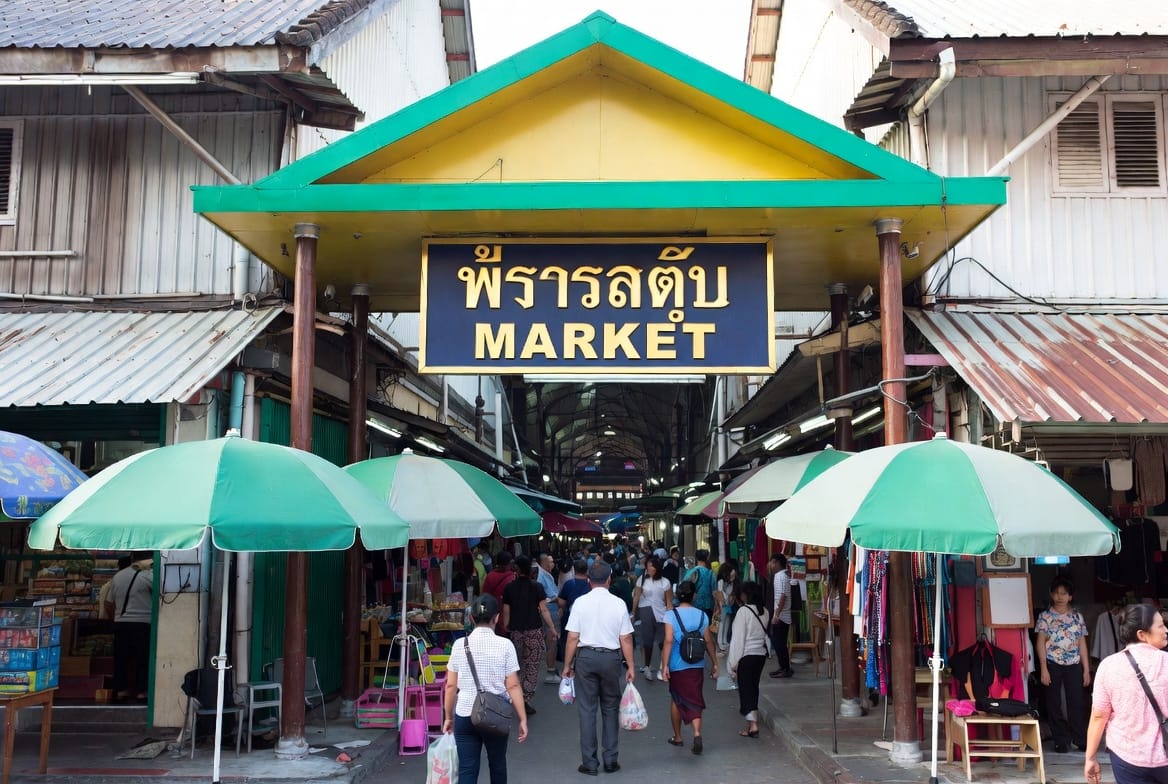
The covered entrance to Wang Lang Market near Siriraj Hospital
11 • SNACK HEAVEN

ACROSS THE RIVER • วังหลัง

Wang Lang Market

Wang Lang is one of the strongest snack environments in the city. The lanes outside Siriraj Hospital are packed with stalls selling grilled bananas, a wide range of Thai desserts, fried chicken, fish cakes, meatballs and other small items designed for grazing rather than a single large meal.

Hospitals and universities in Bangkok often generate excellent surrounding food because they create steady daily demand from staff, students and visitors. Wang Lang is the clearest example. Quality stays high, variety is broad, and it is easy to lose an hour simply moving from stall to stall.

It is primarily a daytime place — most stalls begin closing by late afternoon. The short boat ride across the river makes the visit feel like a small outing in itself.

Getting there: Chao Phraya Express Boat to Wang Lang pier, right outside Siriraj Hospital — or the short cross-river ferry from Tha Pra Chan. The market lanes start at the hospital gates.

Peak hours: Daytime — gone by late afternoon
BOAT
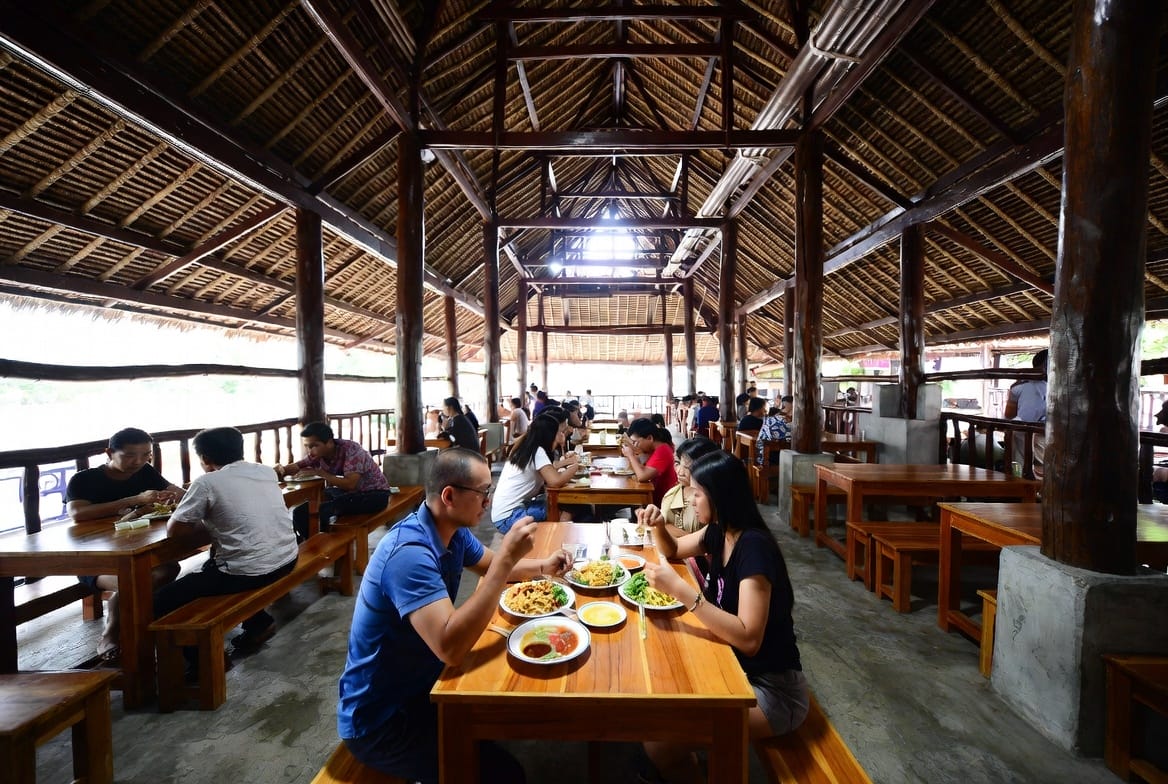
Diners at wooden tables in the traditional open-air food court of Nang Loeng market
12 • HERITAGE

OLD BANGKOK • นางเลิ้ง

Nang Loeng

Nang Loeng is one of the older surviving markets in central Bangkok. The buildings still carry a traditional wooden character and the food leans toward home-style cooking and classic Thai sweets. At lunchtime the central food-court section fills with office workers and local residents.

Rice and curry is the core: take a plate of rice and point at the dishes you want. The selection changes daily but the standard stays reliable. Around the edges sit dessert vendors and a few snack stalls. The atmosphere is calm and functional — a place that has been feeding the same neighbourhood for generations.

Weekday lunch is the clear peak. By early afternoon many cooked-food vendors begin to close; arrive much after 13:00 and you'll find a quieter, more limited version of the market.

Getting there: No direct rail. Taxi or Grab — ask for "Talat Nang Loeng" or show นางเลิ้ง. It sits near Democracy Monument and the Golden Mount.

Peak hours: Weekday lunch, before 13:00
TAXI
Market umbrellas and food stalls along the leafy main soi of Ari
13 • LEAFY LOCAL

PHAHONYOTHIN SOI 7 • อารีย์

Soi Ari

Ari has a residential, slightly leafy character that sets it apart from the denser street-food zones. In recent years it has drawn cafes and a younger crowd, but the street-food layer remains present and useful: Isan restaurants, a few vegetarian-leaning places, and the usual mix of noodle and rice stalls.

The smaller branching sois often feel more interesting than the main road. Walk the length of Ari, then explore two or three side streets, and you'll have found enough options for a full meal. The pace is far gentler than Victory Monument or Yaowarat.

Evenings are stronger than lunchtime, and direct BTS access makes it one of the most convenient stops if you're staying in the central or northern part of the city.

Getting there: BTS Ari, Exit 3, straight into Phahonyothin Soi 7. The first stalls are a couple of minutes from the exit.

Peak hours: Evenings
BTS ✓
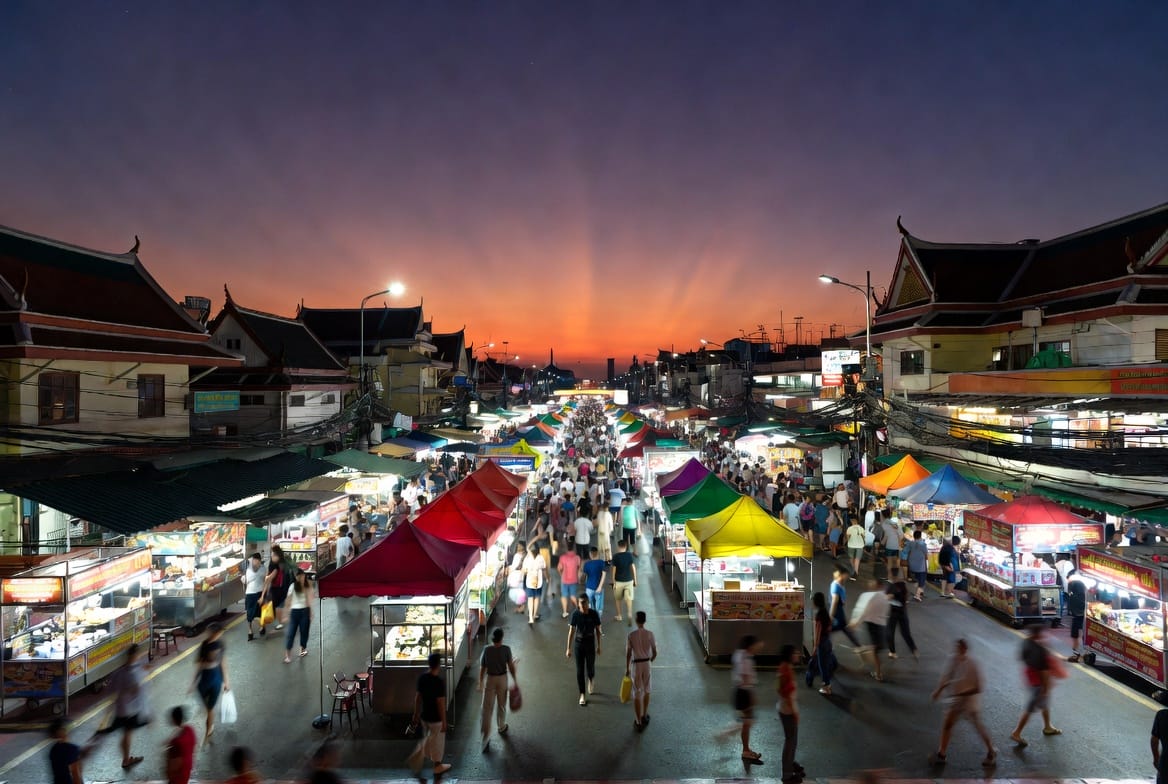
A large open night market glowing at dusk near Ramkhamhaeng
14 • STUDENT FUEL

CAMPUS EATING • รามคำแหง

Ramkhamhaeng

Large universities in Bangkok almost always generate strong surrounding food, and Ramkhamhaeng is the biggest example. The streets opposite the campus support a wide range of cheap, high-volume stalls and small restaurants. Southern Thai curries appear frequently, along with Isan food and the standard student stir-fries and noodle dishes.

The atmosphere is young and practical. Portions are large, prices stay low, and turnover is constant during term time. It is not a refined experience, but it is an honest one — you are eating the same food as the students and staff who use the area every day.

Both lunch and evening are active, and the scale means you can move between several distinct clusters without walking far.

Getting there: Airport Rail Link Ramkhamhaeng, then a short bus, motorcycle taxi or walk — or simply Grab to Ramkhamhaeng University (มหาวิทยาลัยรามคำแหง). The food streets face the campus.

Peak hours: Lunch and evening in term time
ARL
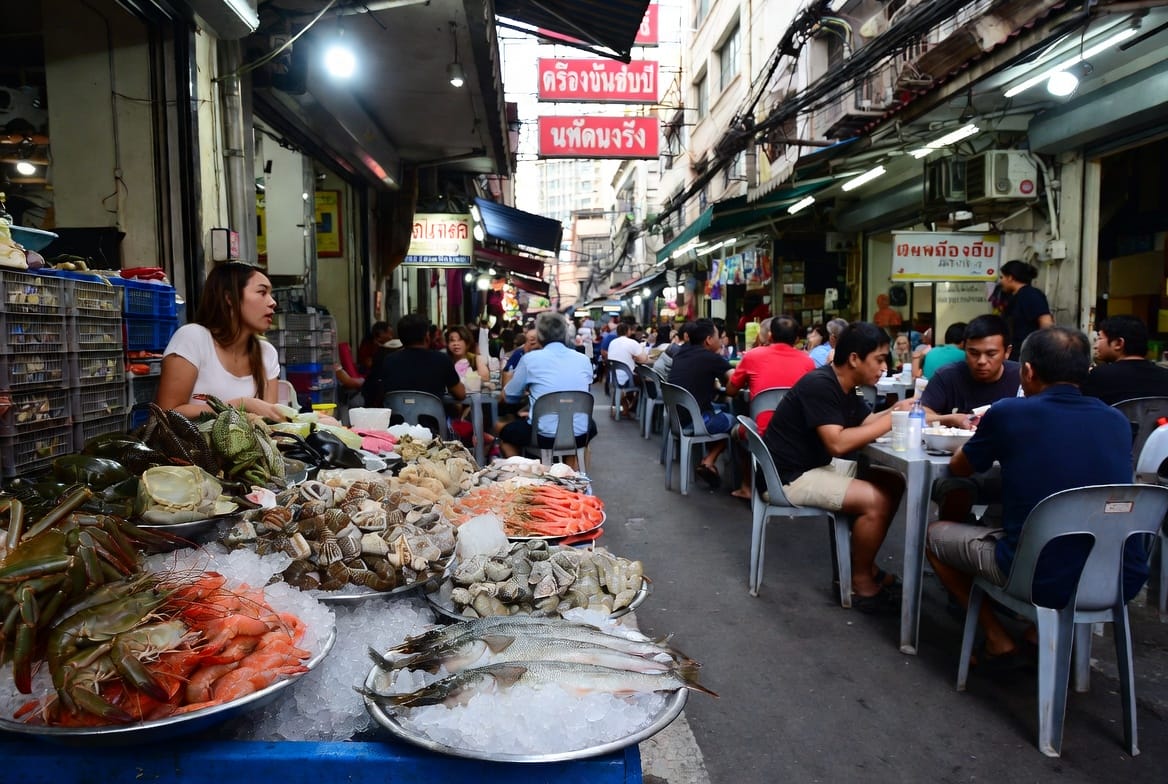
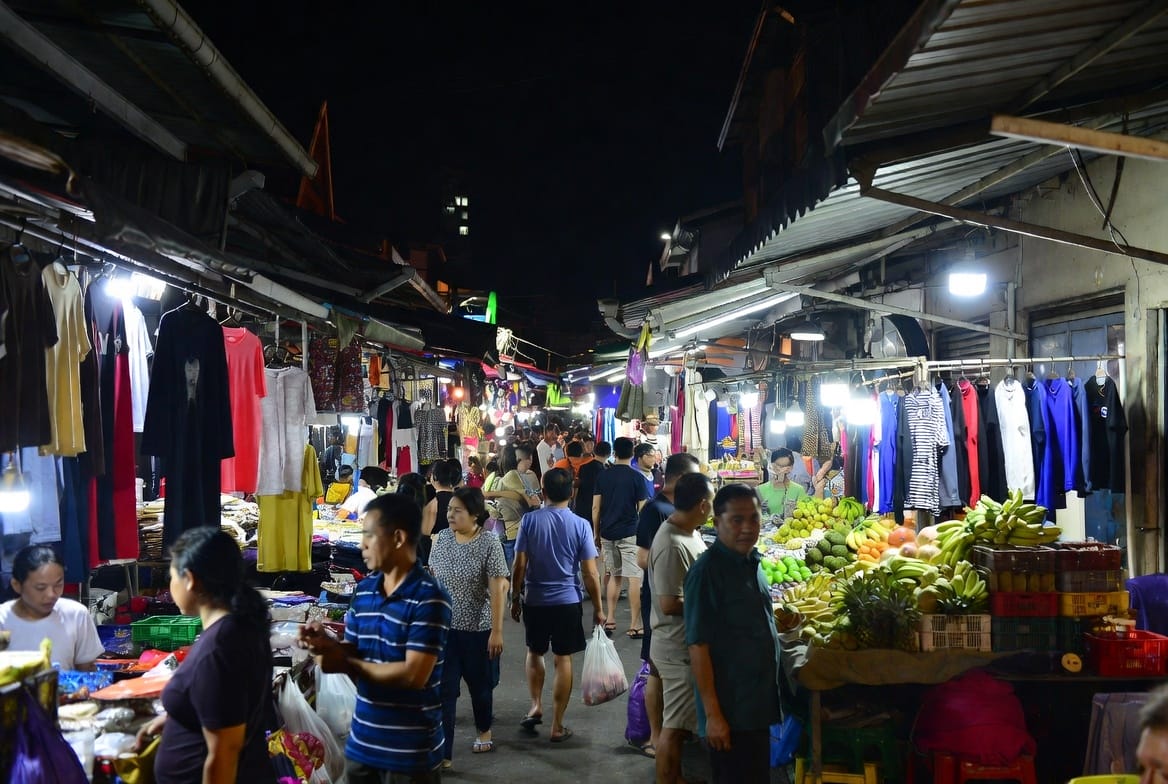
Fresh seafood and prepared dishes on display at the Silom Soi 20 morning market
15 • EARLY BIRD

BUSINESS-DISTRICT MORNINGS

Silom Soi 20

Silom Soi 20 works on a completely different clock. Early in the day the soi closes to regular traffic and becomes a market: curries, chicken rice, sweets and prepared dishes that office workers buy to take away or eat quickly on the spot. One of the more distinctive offerings is black sticky rice served with custard.

The rhythm is strict. Busiest in the early morning, thinning by mid-morning; a few places stay open later, but the true street-market character belongs to the first hours of the day. Sitting in a major business district, the crowd mixes office workers and residents.

If you want the full version of the place, arrive early. Come after 10:00 or 11:00 and you'll find a much quieter and more limited scene.

Getting there: BTS Chong Nonsi, Exit 2. Walk along Silom toward the colourful Sri Mariamman Hindu temple — Soi 20 is across the road from it.

Peak hours: Early morning — done by 10:00
BTS ✓
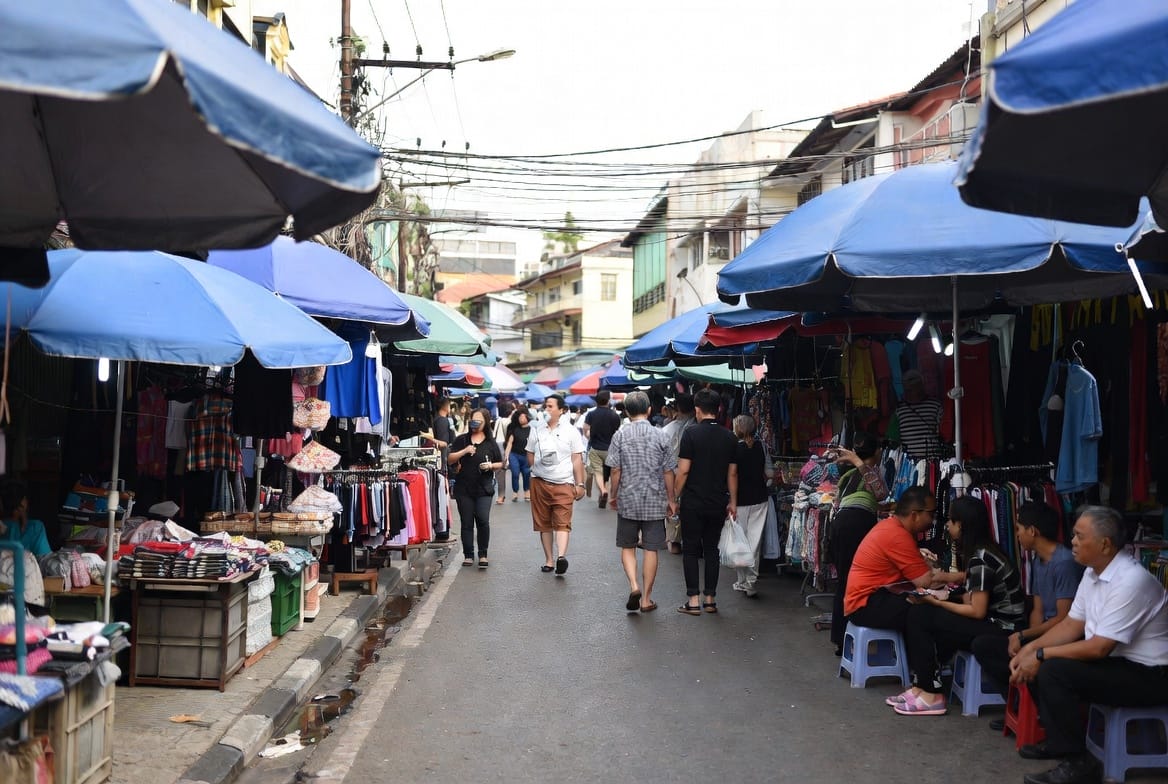
Mixed market stalls with clothes and fruit in the streets around Sam Yan
16 • CAMPUS CLASSIC

CHULALONGKORN'S DOORSTEP • สามย่าน

Sam Yan

Sam Yan has changed as the surrounding district has been rebuilt, but a solid layer of street food and market activity remains. You still find deep-fried snacks, Isan dishes, rice-and-curry places and the kind of cheap, quick food that university areas specialise in.

The MRT station makes arrival simple. Once above ground, the food clusters aren't difficult to locate — they tend to occupy the spaces that have so far escaped the newer commercial developments. The crowd mixes students, office workers and long-term residents.

Both daytime and early evening work. The density is gentler than Yaowarat or Victory Monument, but there is enough variety to eat very well without travelling further.

Getting there: MRT Sam Yan — come out of the station and you're already there. The remaining market streets sit around Chulalongkorn University.

Peak hours: Daytime and early evening
MRT ✓

Make it a food trip

Eating Your Way Across Bangkok

🚇

Follow the rails

Eleven of these sixteen places sit on or near the BTS, MRT, Airport Rail Link or the river boats. A one-day transit pass plus an appetite covers most of this list — save the taxi-only trio for a dedicated old-Bangkok day.

Respect the clock

Street food in Bangkok runs on schedules. Silom Soi 20 is finished by mid-morning, Nang Loeng by early afternoon, and Yaowarat doesn't properly wake until dark. Match the place to the hour and you will never eat badly.

🗺️

Plan the whole route

Bangkok is usually the start of a bigger trip. Our free ThaiTripPlanner builds a day-by-day itinerary around the kingdom — so you can chain these food streets into Isan, the islands or the north without losing a meal.

The stalls on this list survive because locals eat at them every day. Turn up hungry, point at what looks good, take the plastic stool — that's the entire technique.

ThaiThuk

Written by

Genext Information Systems Staff

ThaiThuk's editorial team at Genext Information Systems — writers and long-term residents based in Thailand who report from the ground on Thai culture, travel, food and community. Every piece is checked against primary sources and updated as details change. More about ThaiThuk →