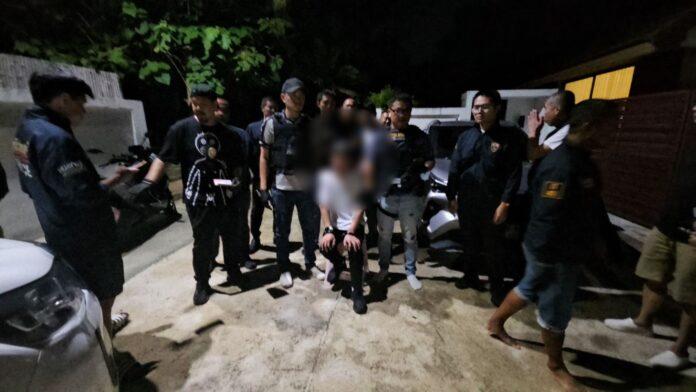
Pattaya Provincial Court, Chonburi
Three months from a crashed sedan to a 46-year sentence
By Genext Information Systems Staff
Published 6 August 2026 • 6 min read
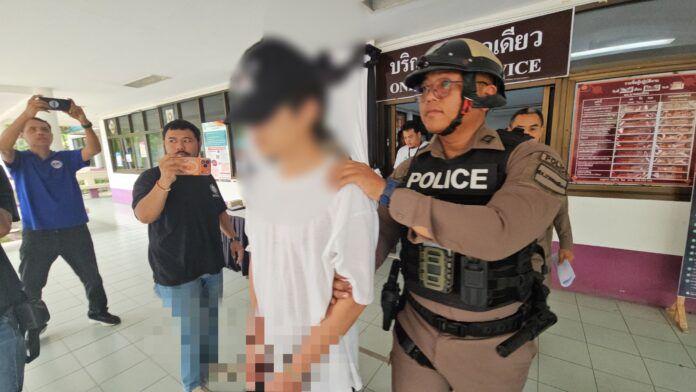
The biggest Pattaya news story of the week was decided in a courtroom rather than on a bar street. On 4 August 2026, Pattaya Provincial Court sentenced a 31-year-old Chinese national to 46 years in prison for stockpiling military-grade weapons, explosives and signal-jamming equipment in a rented house in Huai Yai, less than half an hour from Jomtien beach.
The defendant, named in Thai court reporting as Mingchen Sun, pleaded guilty to charges under the Firearms Act, the Arms Control Act and the Radio Communications Act. He holds Chinese, Dominica and Cambodian passports. The court reduced his sentence by one third because of the plea, then ran the remaining terms consecutively — 44 years plus 24 months, or 46 years in total — citing the threat the offences posed to public safety and national security. Every seized item was confiscated.
In practice, Thai law caps the time actually served on stacked sentences of this kind at around 20 years. Even so, this is one of the heaviest arms sentences handed down in Chonburi in recent memory, and it landed less than three months after the arrest — unusually fast for a case of this size.
Pattaya news: the crash that opened the case
Nobody was looking for an arsenal. Officers from Na Jomtien Police Station were responding to an overturned sedan.
On the evening of 8 May 2026, a sedan flipped on a road in Banglamung district. Sun was the driver. A Taiwanese woman travelling with him was initially detained, then released after investigators found no link between her and what came next.
What changed the night was a handgun found inside the car. That single find gave police grounds to search the house Sun was renting in the Maple housing estate in tambon Huai Yai — a quiet, unremarkable Pattaya Thailand suburb of gated lanes and long-stay tenants, the sort of place where nobody asks a neighbour many questions.
Reporting at the time put his rent at 38,000 baht a month and said he had been living there for roughly two years. He had entered Thailand legally on a long-term privilege visa and held a non-Thai national identity card. Immigration authorities revoked the visa after the arrest.
A second defendant, still unidentified publicly and linked by prosecutors to procuring the weapons, has denied the charges and remains in custody. Because that defendant is contesting the case, that trial will run considerably longer.
The case in numbers
- 8 May — car overturns, handgun found
- 4 Aug — 46-year sentence delivered
- ~5kg — C4 plastic explosive seized
- 3 — passports held by the defendant
- 38,000 — baht monthly rent on the house
- 1155 — Tourist Police, English spoken
What officers found inside the Huai Yai house
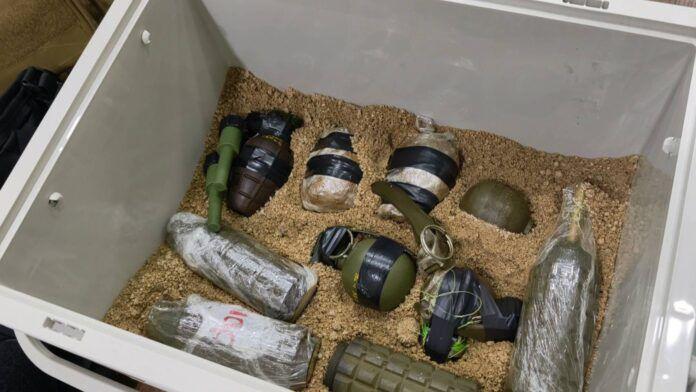
The inventory read like a military supply list rather than a collector's cabinet. Police recorded M4 and M16 assault rifles, a Glock 9mm pistol, hundreds of rounds of ammunition and loaded magazines, and close to five kilograms of C4 plastic explosive.
Some of that C4 had been built into body-armour vests fitted with remote detonators — in effect, wearable explosive devices. Alongside them officers logged Russian-made POMZ-2 anti-personnel mines, assorted hand grenades including Korean-made types, separate detonators, body armour, gas masks, jerry cans of petrol, radio signal jammers and communication equipment. Some items carried markings associated with Thai military production, a detail that pushed the case straight onto the desks of national security agencies.
The explanation police did not accept
Sun's first account was that he was a depressed firearms enthusiast assembling the means for an elaborate suicide. Investigators rejected it outright — the quantity, the jammers and the remote detonators did not fit.
Their working conclusion, according to Thai reporting, pointed instead towards Cambodian-based scam-centre networks and a dispute inside that world, rather than any planned attack on a target in Thailand. Expanded investigations have since produced further arrests and asset freezes connected to the wider network. That distinction matters for readers of Thai news: the arsenal was in Pattaya, but the quarrel it belonged to almost certainly was not.
Why this Pattaya news story keeps circling back to scam compounds
For two years, a steady share of Thailand news has traced the same thread: the fraud compounds clustered along the Cambodian and Myanmar borders, the money that moves out of them, and the people who come to Thailand's coastal cities to sit quietly on the proceeds. Chonburi is comfortable, well connected and easy to disappear into. Long-stay rentals in estates like the one in Huai Yai are taken for cash and rarely questioned.
Pattaya has spent recent weeks in the national headlines for other reasons too — most heavily over the murders of two Russian siblings and a Thai family of three near Huai Yai, a case with no connection to this one beyond the district on the map. Taken together, they have produced an unusually grim run of Pattaya news for a city whose reputation normally rests on beaches and nightlife.
What it changes for visitors and residents
Very little, in honesty, and it is worth saying so plainly. Nothing here alters the Thailand visa routes you arrive on, the best time to visit Thailand, or the ordinary pleasures of a budget travel Thailand fortnight — Thai food at 60 baht a plate, a baht bus down Second Road, an afternoon on Koh Larn. The long list of things to do in Pattaya is unaffected, and the risk to an ordinary tourist from a case like this is effectively nil.
What it does illustrate is how Thai authorities are now treating firearms and explosives offences involving foreign nationals: fast prosecution, consecutive sentencing, and immigration consequences that follow automatically. Anyone living in Thailand on a long-stay visa should read the speed of this verdict as the point of it.
What a Thailand travel guide should tell you about weapons law
Thailand's arms legislation is stricter than most visitors assume, and enforcement does not soften for foreigners.
Foreigners cannot own firearms. Gun licences under the Firearms Act are issued to Thai nationals with a registered address and a demonstrated need. There is no tourist or expatriate route, and possession without a licence is a criminal offence, not a fine.
Replicas, parts and ammunition all count. Blank-firing pistols, airsoft guns above certain specifications, loose rounds and even magazines have all produced arrests. Buying online for delivery to a Thai address is a bad idea.
Radio jammers are separately illegal. The Radio Communications Act charge in this case was not decorative. Signal jammers and unlicensed transmitters carry their own penalties.
Immigration consequences are automatic. A serious criminal charge normally triggers visa revocation, blacklisting and deportation on release — as our guide to being denied entry to Thailand sets out in more detail.
If you find something, do not touch it. Unattended bags, ordnance or suspicious packages are a 191 call. The Tourist Police line, 1155, has English-speaking operators.
What happens next
Sun's sentence is subject to the usual appeal window, and Thai defence lawyers frequently test consecutive terms of this length on appeal. The co-defendant's contested trial is the one still to watch, because it is the route through which the procurement chain — who supplied Thai-marked ordnance, and how it crossed a border — may finally be aired in open court.
For Pattaya, the more useful question is not what was in the house but how long it sat there unnoticed. Two years, one rented address, one crashed car. ThaiThuk will update this Pattaya news report when an appeal is lodged or the second trial opens.
Planning ahead
Know the ground before you get here
Whether you are pricing a fortnight or a year, ThaiHolidayBudget works from 2026 numbers, and ThaiTripPlanner will build the days around it.
Price out your trip →
Written by
Genext Information Systems Staff
ThaiThuk's editorial team at Genext Information Systems — writers and long-term residents based in Thailand who report from the ground on Thai culture, travel, food and community. Every piece is checked against primary sources and updated as details change. More about ThaiThuk →
Sources
- The Pattaya News — "Chinese Man Sentenced to 46 Years in Prison After Discovery of Massive Military Grade Weapons Cache in Pattaya", 4 August 2026.
- Khaosod English — "Chinese man jailed 46 years over Pattaya weapons cache", 4 August 2026.
- Bangkok Post — "Chinese man gets 46 years for illegal Pattaya arsenal", 4 August 2026.
- The Thaiger — "Court jails Chinese man 46 years over weapons cache in Chon Buri", 4 August 2026.
- Khaosod English — "Chinese nationals arrested after Pattaya crash uncovers cache of weapons and explosives", 9 May 2026.
Note on photographs: the three images on this page are press photographs published by The Pattaya News (TPN Media) with its reporting on this case, reproduced here for news reporting with credit to that source. Faces were obscured at source. No AI-generated imagery is used. Note on detail: the sentence is reported as consecutive terms of 44 years plus 24 months, expressed as 46 years; the practical maximum served under Thai law is lower. Names and figures are as given in Thai court reporting and translated from Thai. The co-defendant has denied the charges and is entitled to the presumption of innocence. This report will be updated as verified information emerges.